
To know
About artworks
Title
Date
Dimensions
Origin
Collection
Location
Position
Photo credits
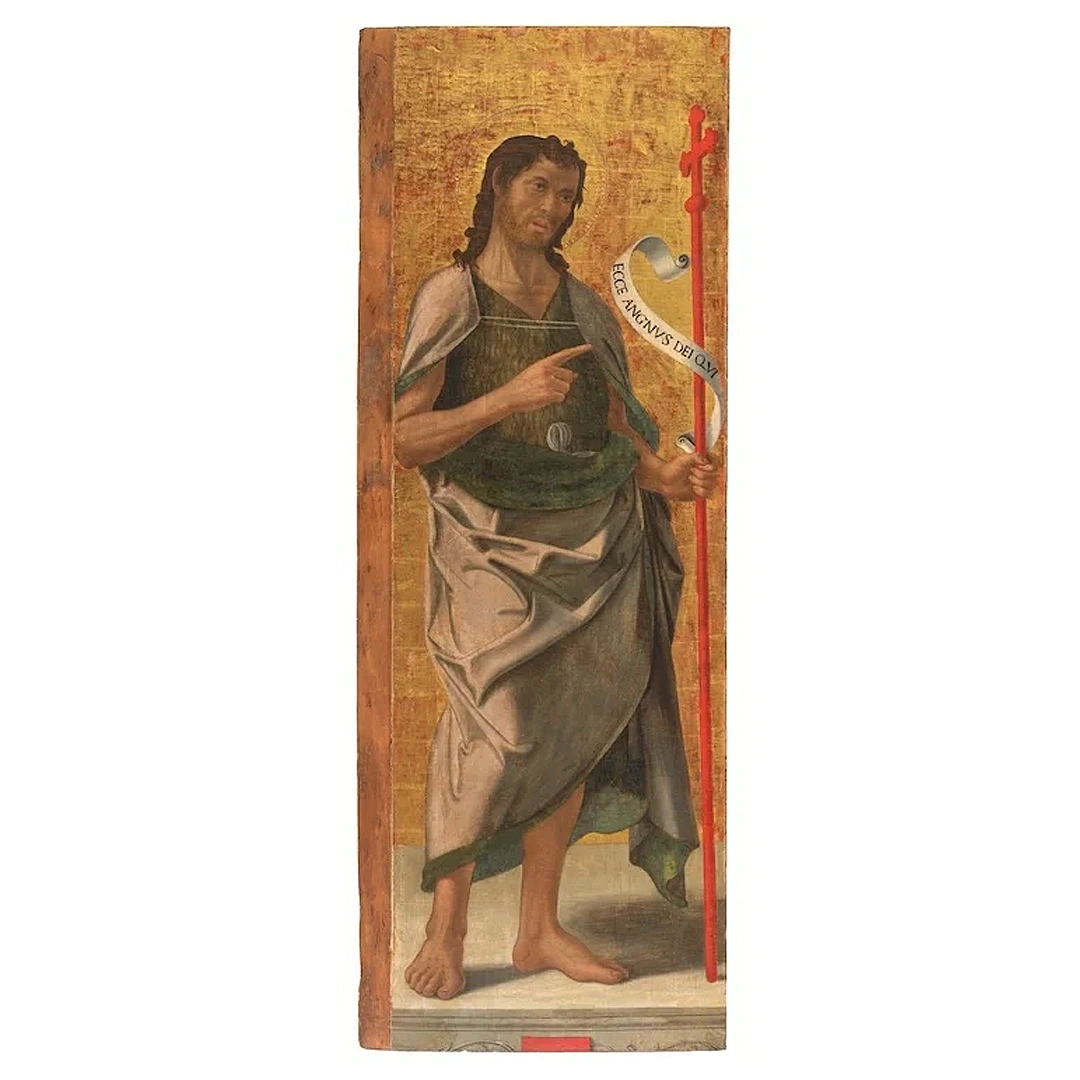
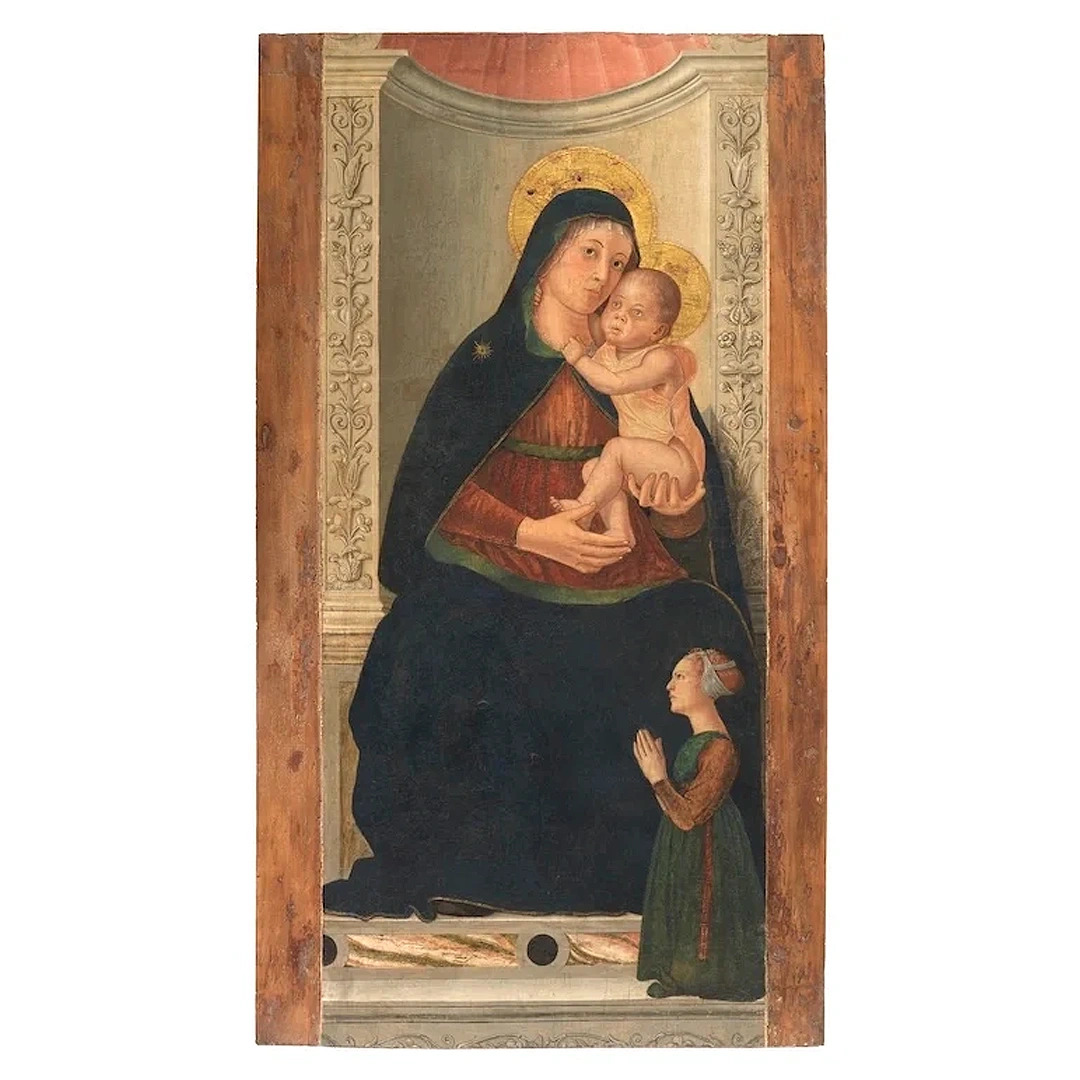
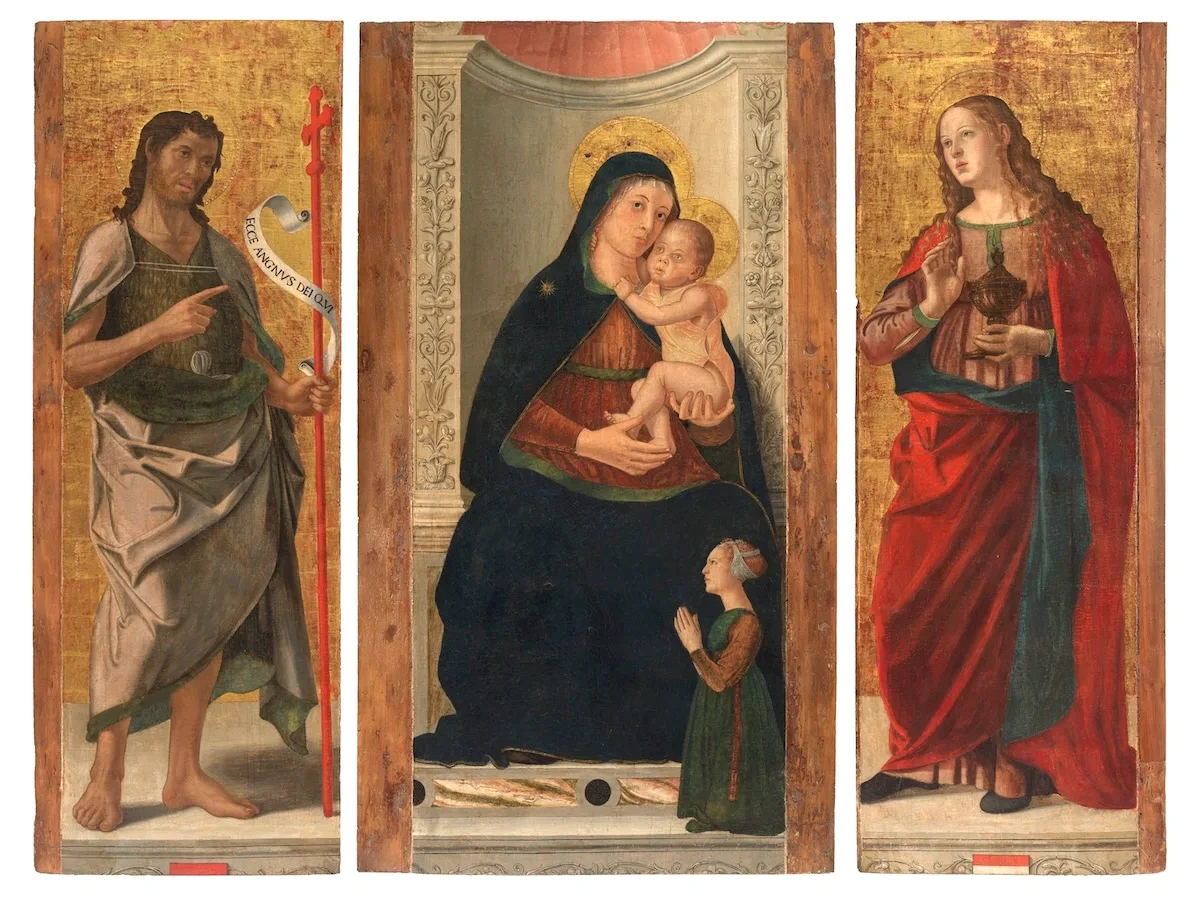
Created as an image for private devotion or as an altarpiece intended to adorn a noble chapel, the triptych is now missing its original wooden frame. The panels were trimmed in a remote period to standardise their sizes, a process that caused the loss of parts of the Virgin’s throne and the lower frieze, including two now-lost noble coats of arms, later partially recovered through an undated restoration. The triptych was once part of the art gallery housed on the first floor of the Antonelli Dragonetti de Torres Palace on Via Roio in L’Aquila.
The triptych is the most iconic and celebrated Gothic artwork in Abruzzo, both for its distinctive complex iconography and the high quality of its workmanship. Historian Claudio Strinati described it as “a work of great refinement, charm, and elegance.”
The central panel, with its cusped base, depicts the Madonna and Child enthroned with angels. The left panel depicts the Nativity of Jesus, conceived with a vertical narrative flow from top to bottom, beginning with the Annunciation to the Shepherds in the upper section, the Adoration of Jesus in the middle, and the Bathing of Jesus in the lower section. This last scene also features a character not associated with the nativity scene, adoring Jesus and with his back turned, inexplicably, to the central panel. The right panel—also with a vertical narrative flow, but in the opposite direction to its twin, that is, from bottom to top—presents the Funeral of the Madonna, with the Jew Reuben, the protagonist of a passage from the apocryphal gospels, depicted in the foreground. The work concludes with the tondo in the upper right section, which depicts the Coronation of the Virgin Mary.
If you care about the National Museum of Abruzzo and would like to help protect and enhance its collections, please make a donation.