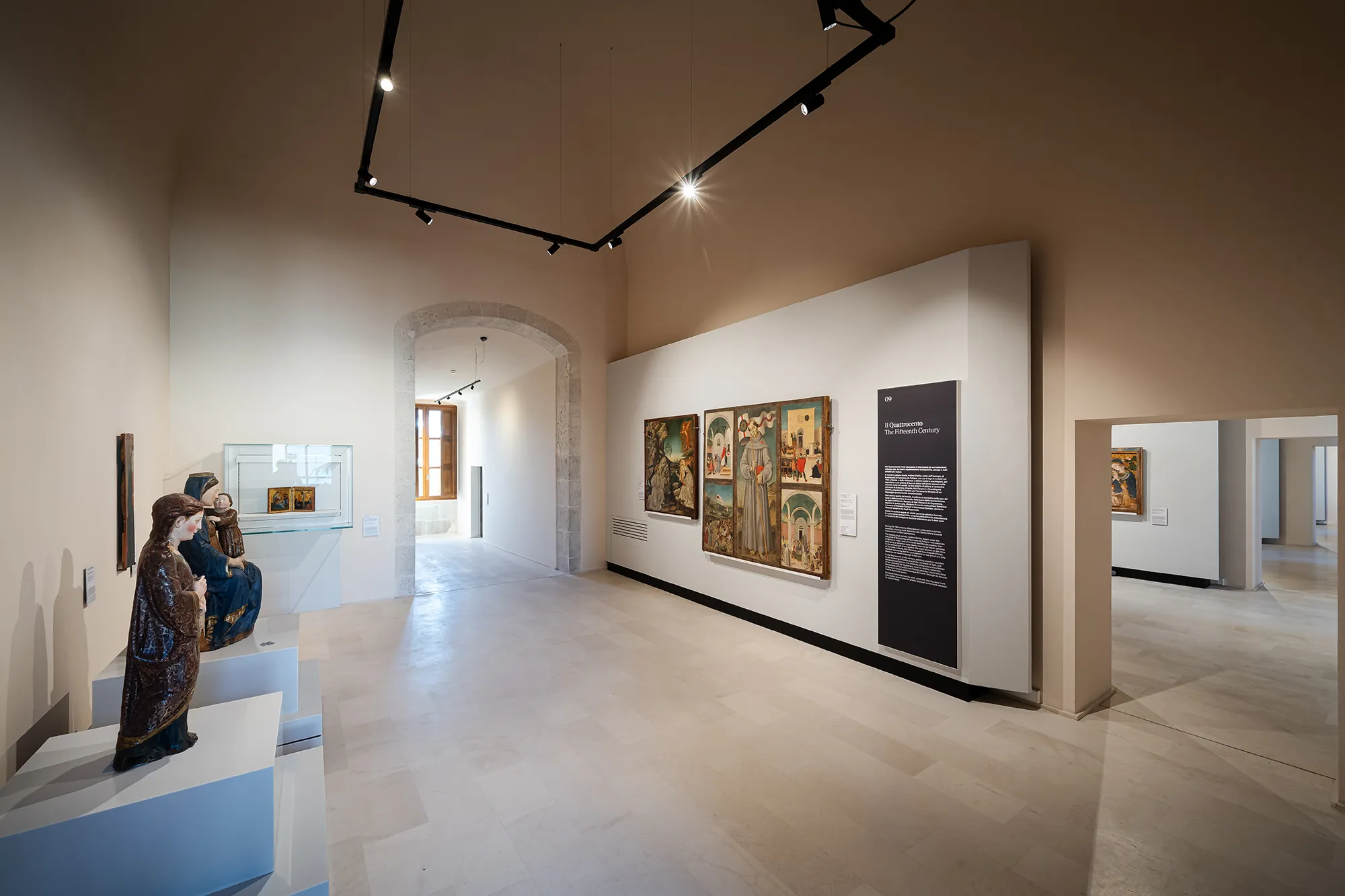
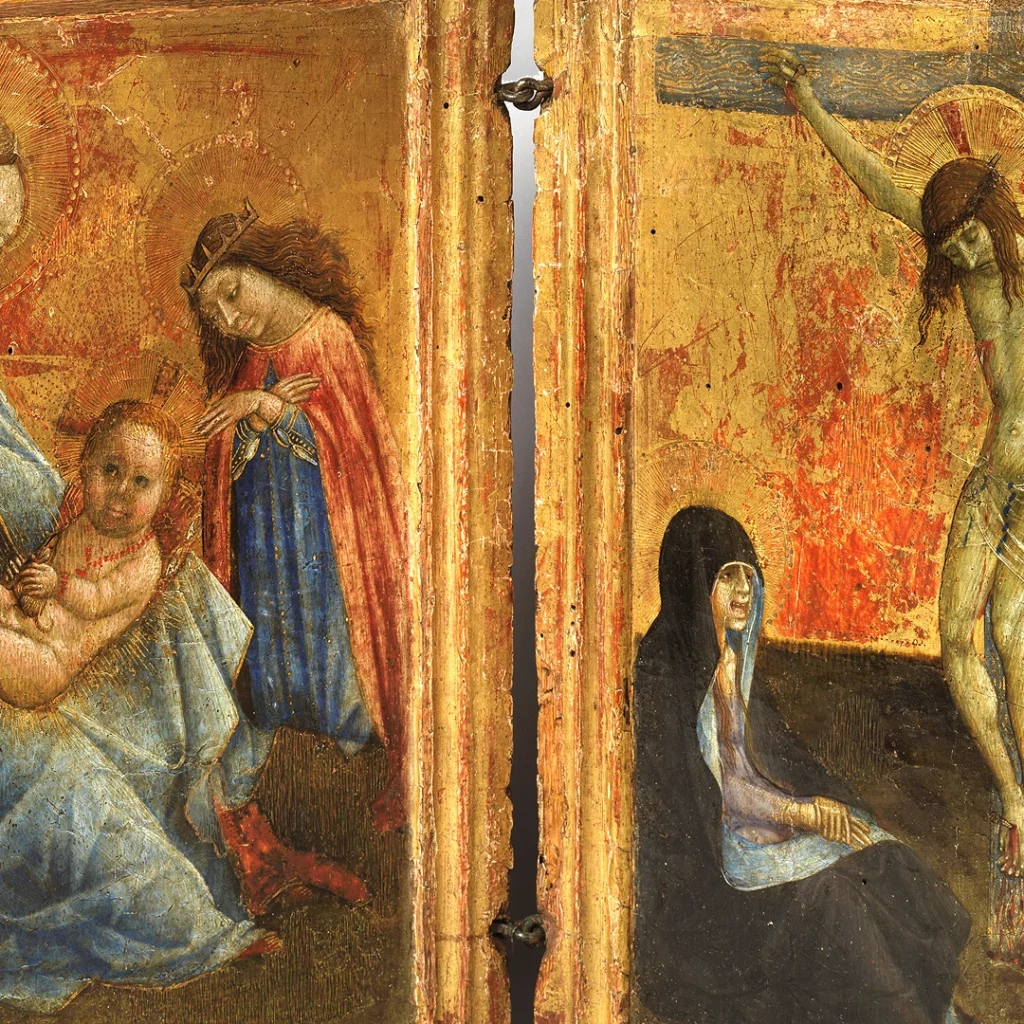
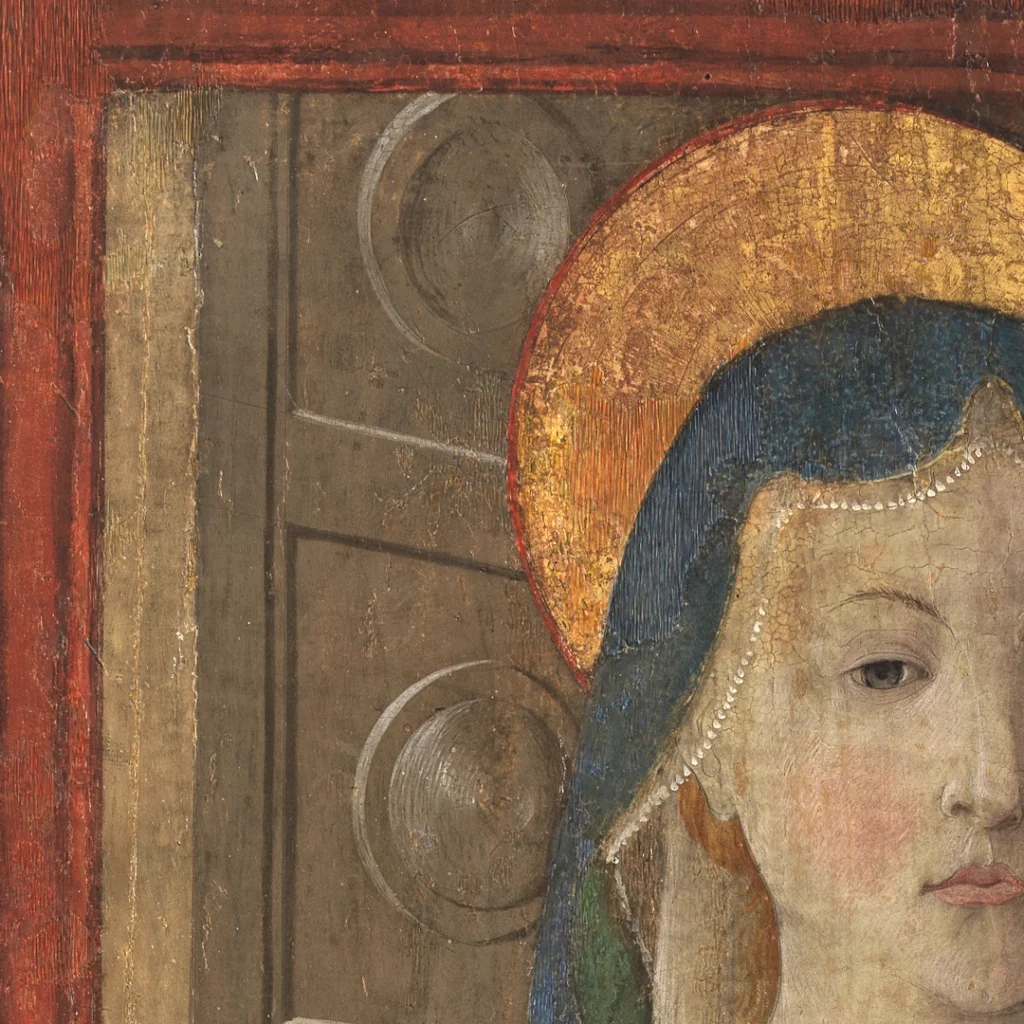
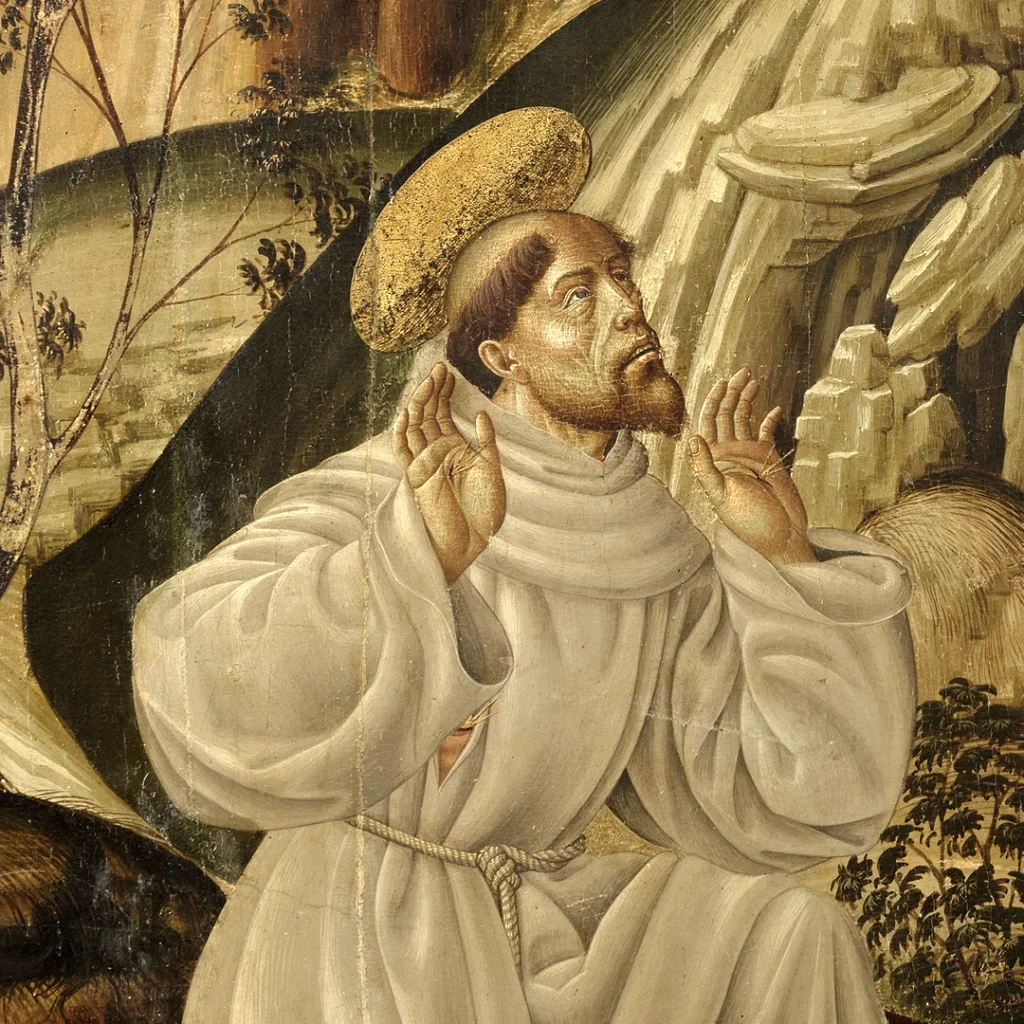
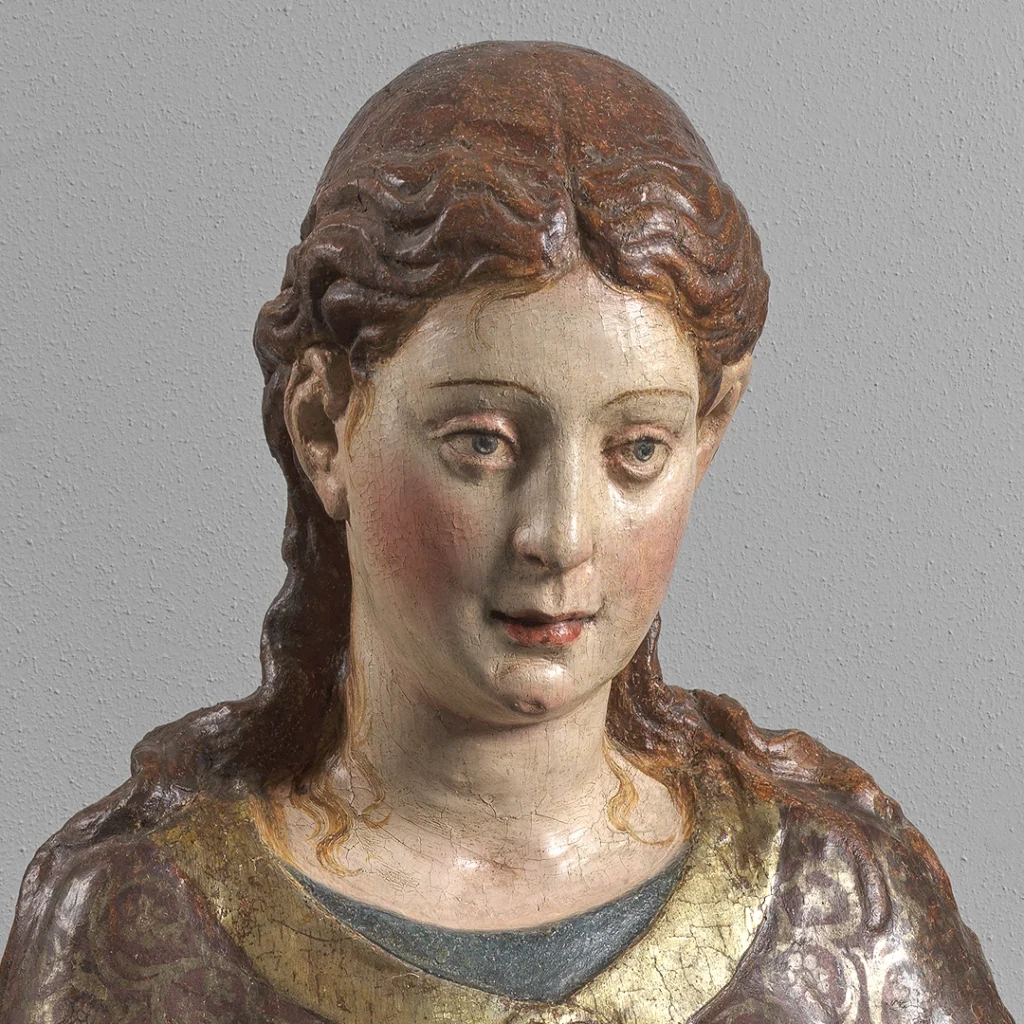
During the 15th century, Abruzzese art underwent a stylistic evolution, moving from distinctly Late Gothic forms towards more mature artistic expressions.
The leading local painter, Andrea Delitio, began under the influence of Bartolomeo di Tommaso da Foligno — his associate in Norcia in 1442 — and of Umbrian and Marche models, later embracing a luminous style clearly inspired by Tuscan painting in the second half of the century. His work focused on the cities of Sulmona, L’Aquila, Atri (Teramo), and Guardiagrele (Chieti). Delitio’s experience laid the groundwork for the arrival of a fully Renaissance visual language in Abruzzo.
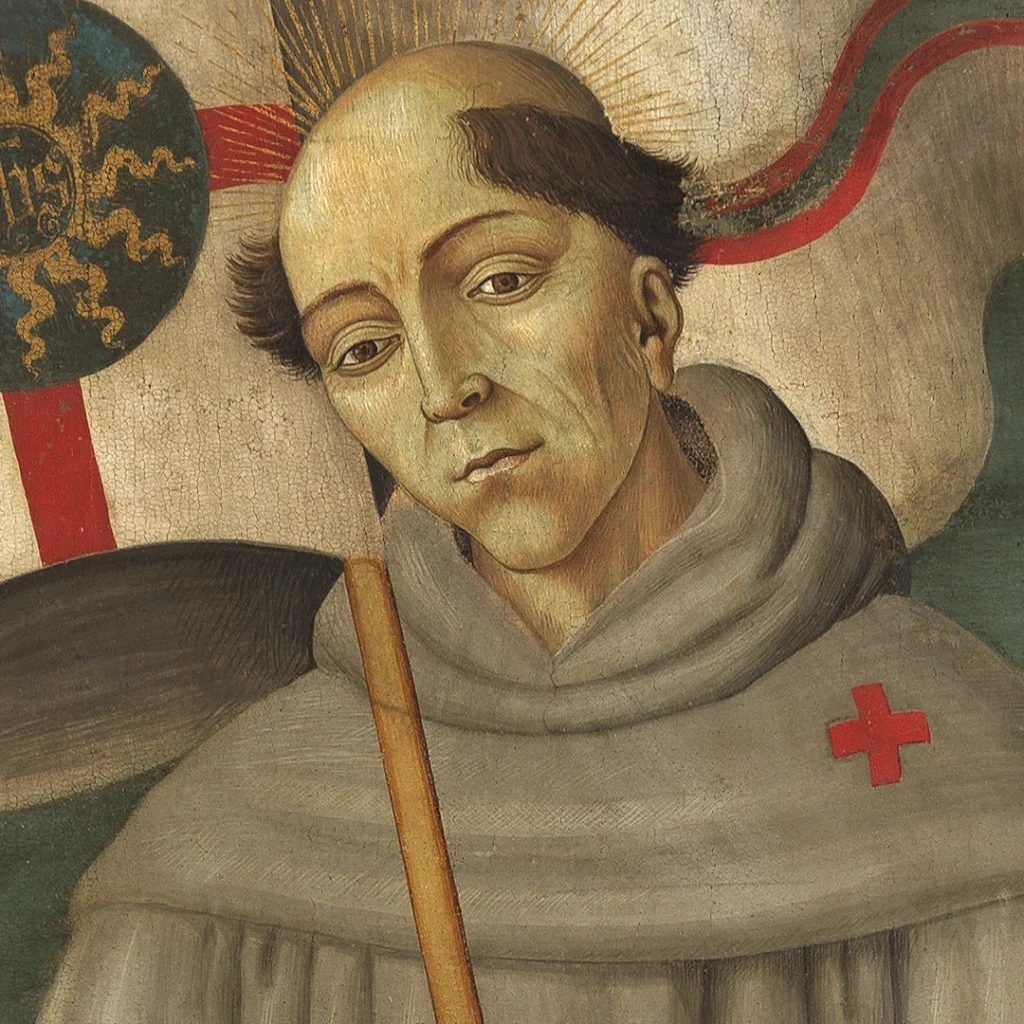
In the final quarter of the century, painting turned its attention to the rendering of bodies and limbs, the study of light, and compositional balance. The artworks of the anonymous Master of San Giovanni da Capestrano, here on display, reflect the innovations of Florentine and Roman painting – especially those of Benozzo Gozzoli and Antoniazzo Romano – brought to Abruzzo via the Apennine routes.
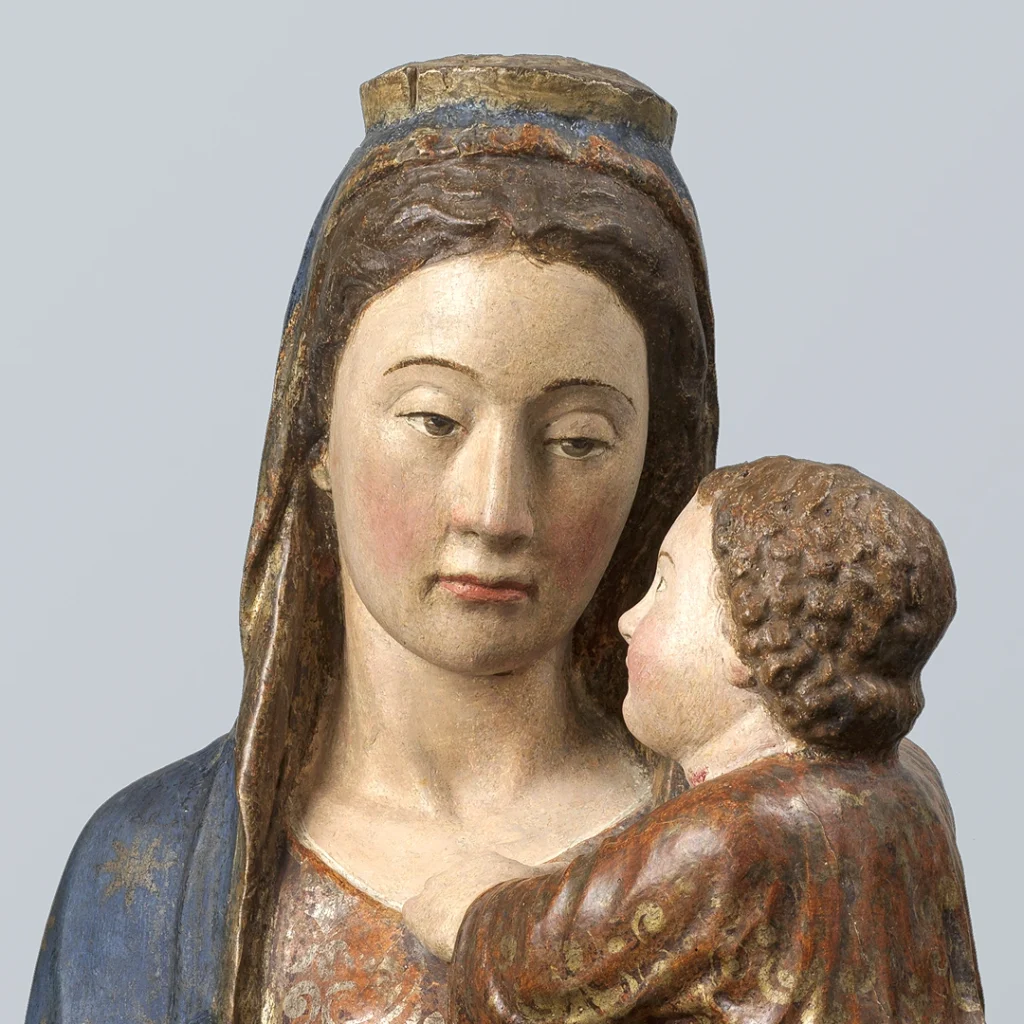
Sculpture followed a similar path, gradually moving away from Late Gothic forms towards greater physical realism and attention to natural detail.