
Description
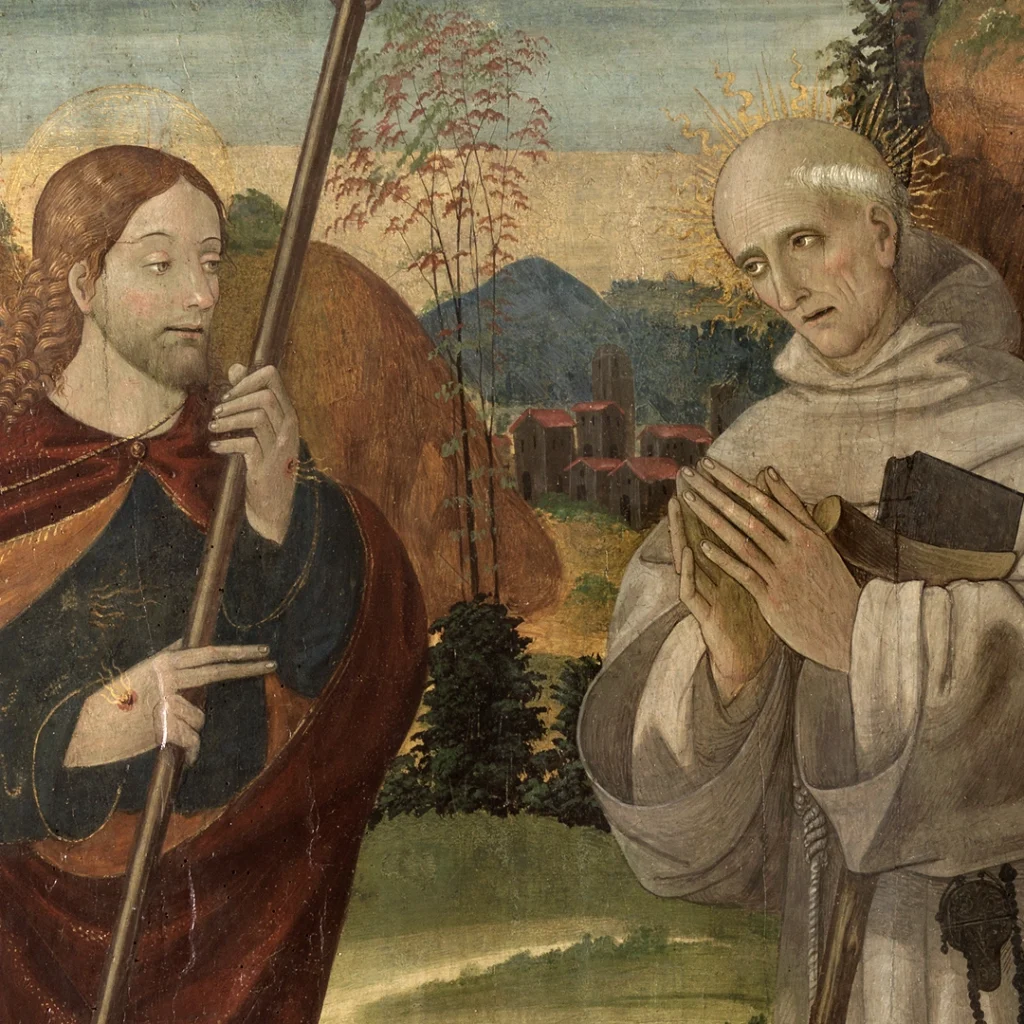
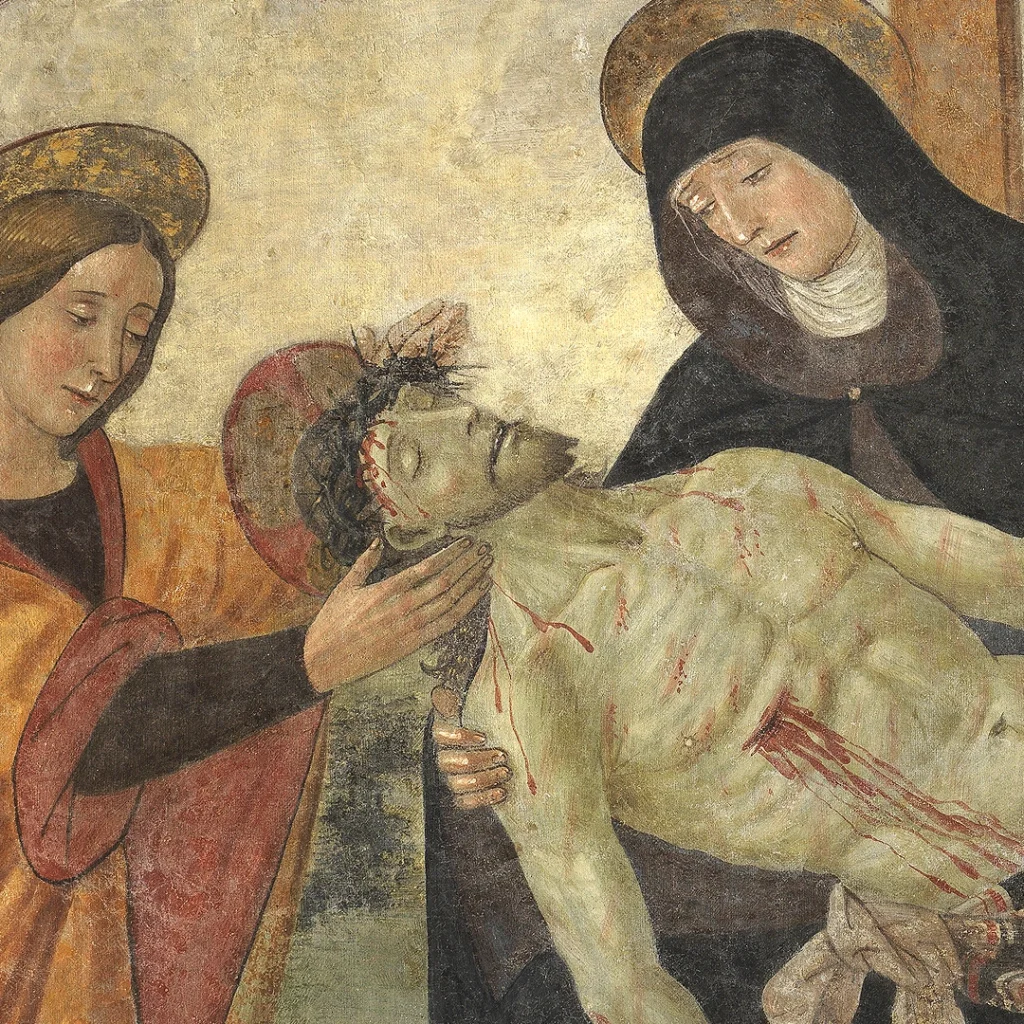
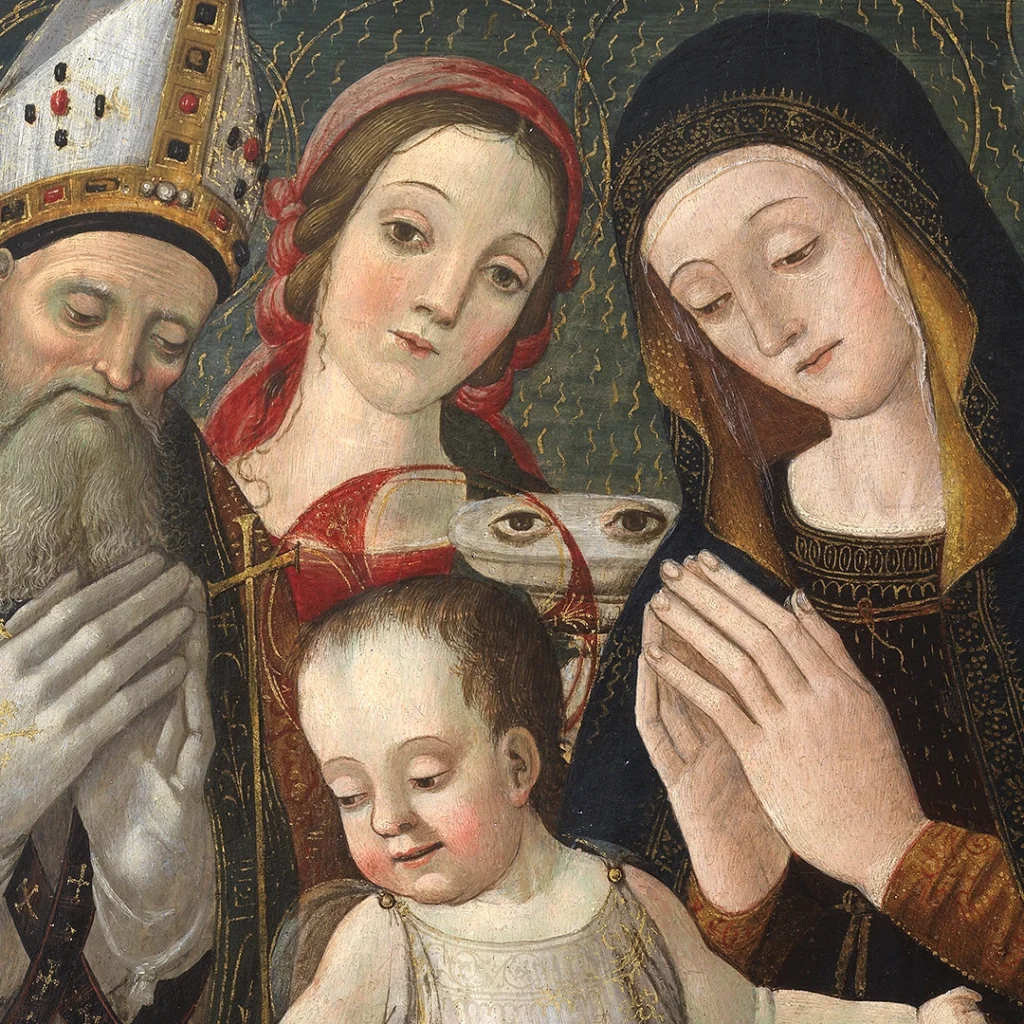
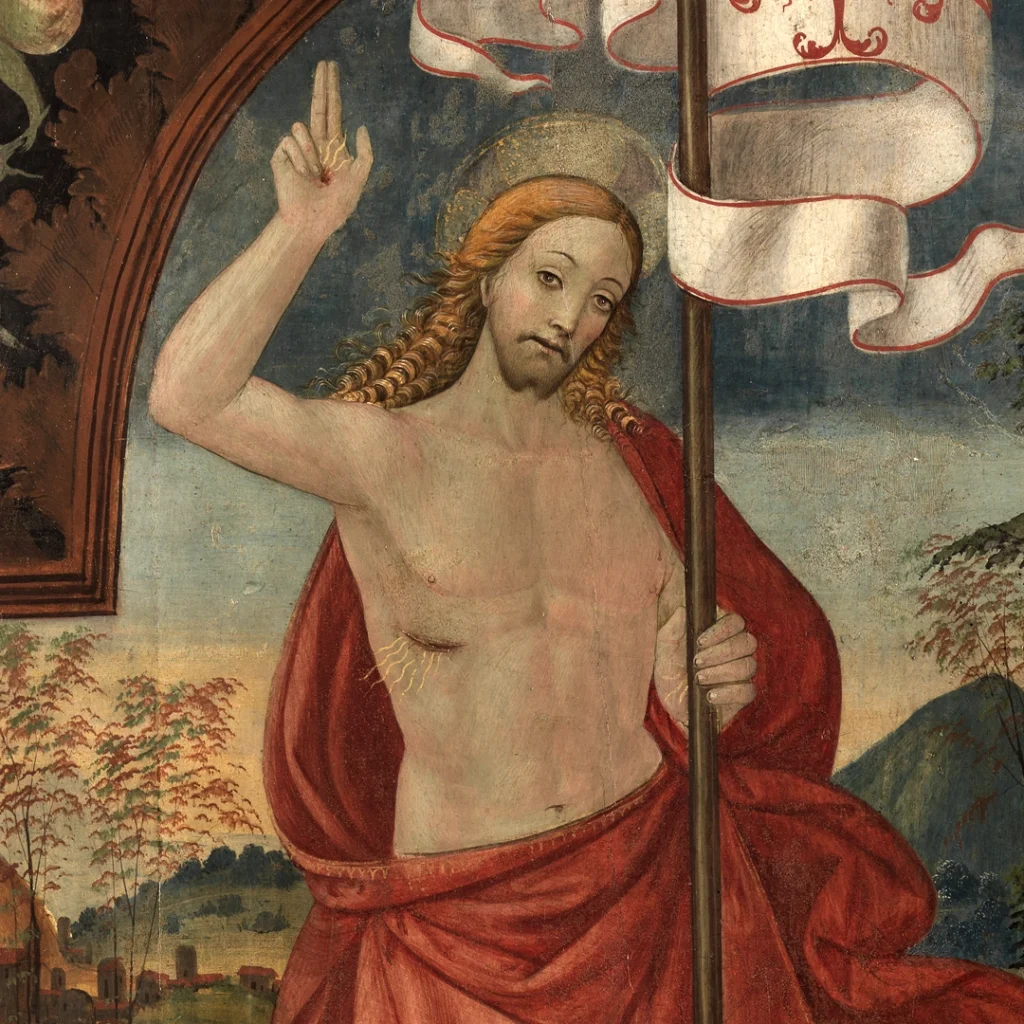
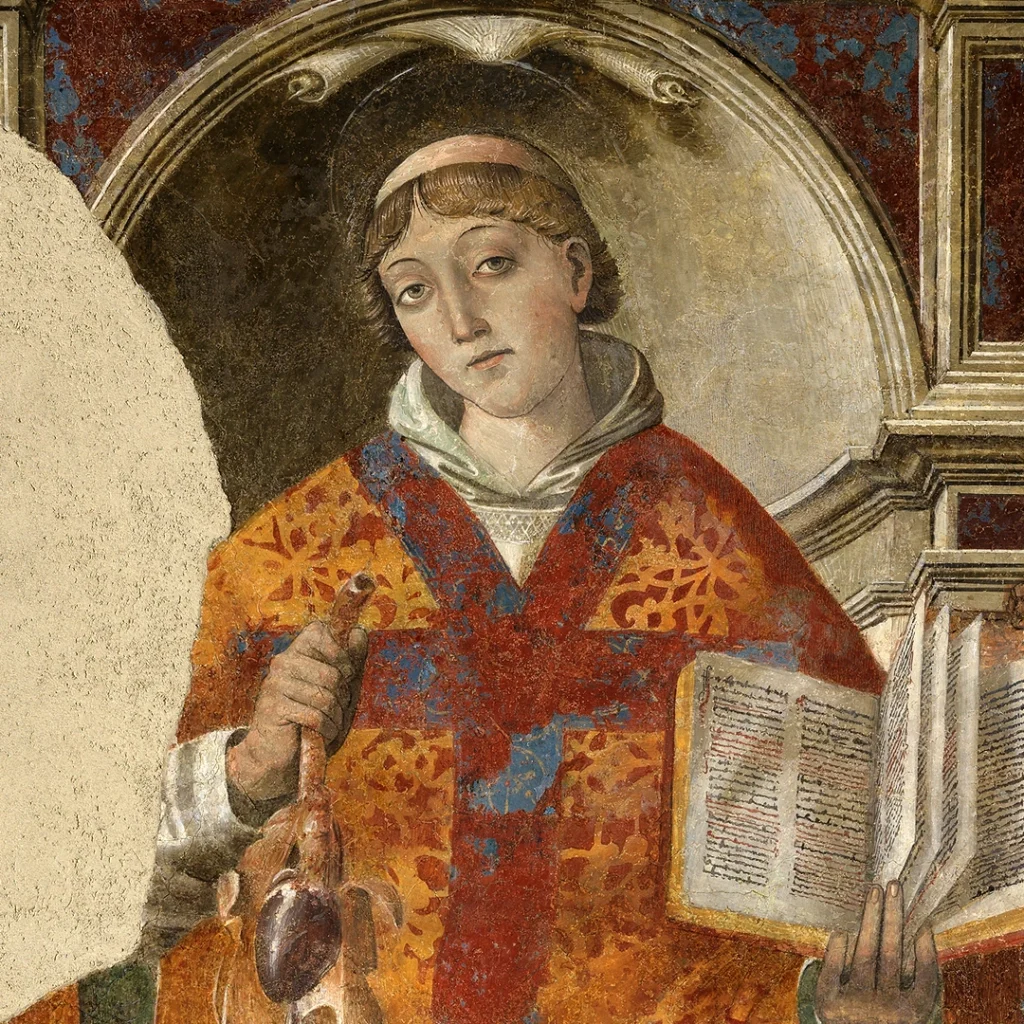
A descendant of a long-established family of artists in the city, he is seen as the leading interpreter of the Franciscan order in Abruzzo. Known for the volume and importance of his commissions, he was a key figure in the artistic scene of his time. The renewed spiritual fervour and demand for clear devotional art found an ideal expression in his painting, which reflected the socio-cultural climate of the early 16th century.
His work shows clear influence from the Umbrian-Roman school: the graceful, emotive faces recall Pinturicchio, while the calm, balanced space evokes Antoniazzo Romano. In his mature production, these influences soften, giving way to a more expressive style, stronger spatial construction, and greater naturalism—signs of modernising in line with Raphael’s innovations.
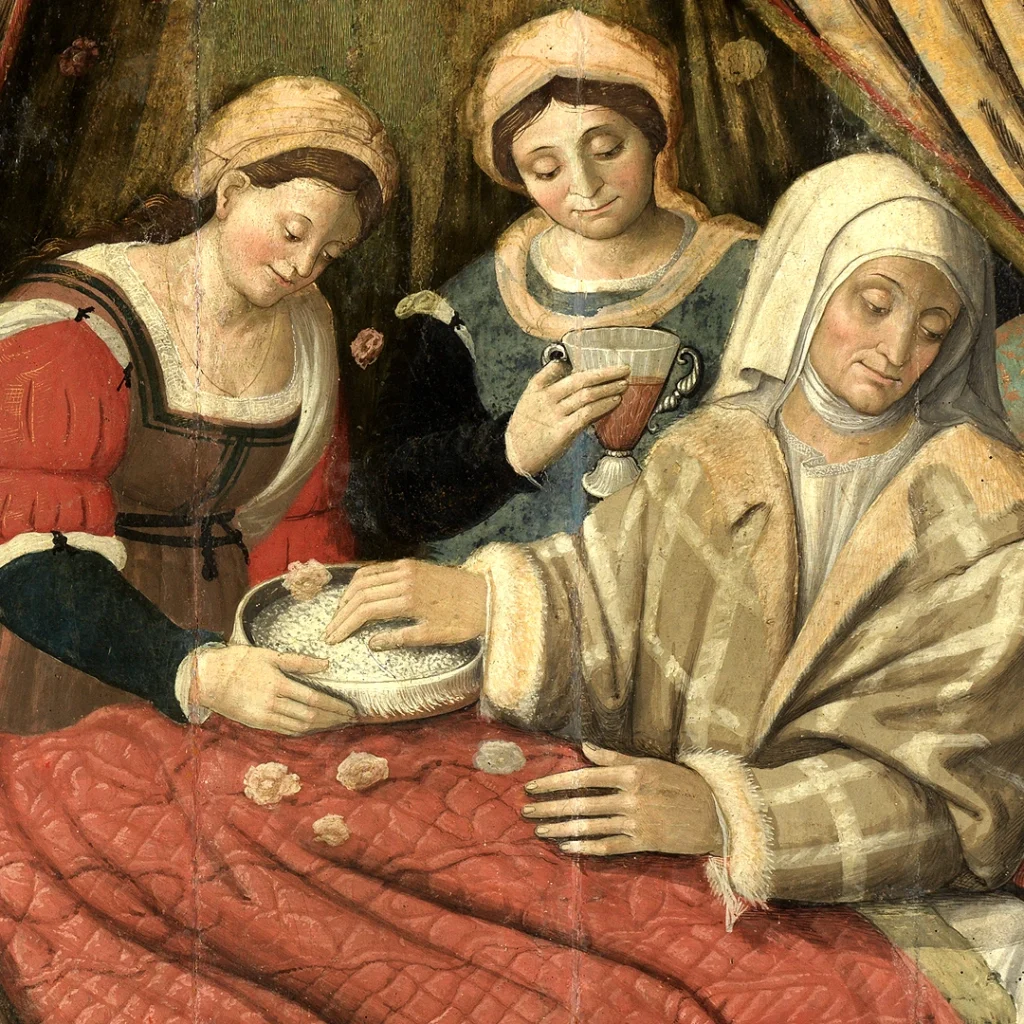
The Nativity of the Virgin, from his final phase, is rich in detail and vibrant execution, blending 15th-century tradition with High Renaissance innovations like the cangiantisms of the angels.