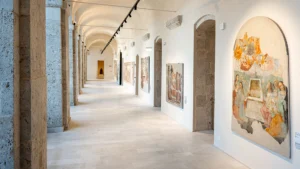
The National Museum of Abruzzo is participating in the 9th edition of the Sustainable Development Festival, Italy’s largest initiative to raise awareness among civil society on the issues of economic, social, and environmental sustainability.
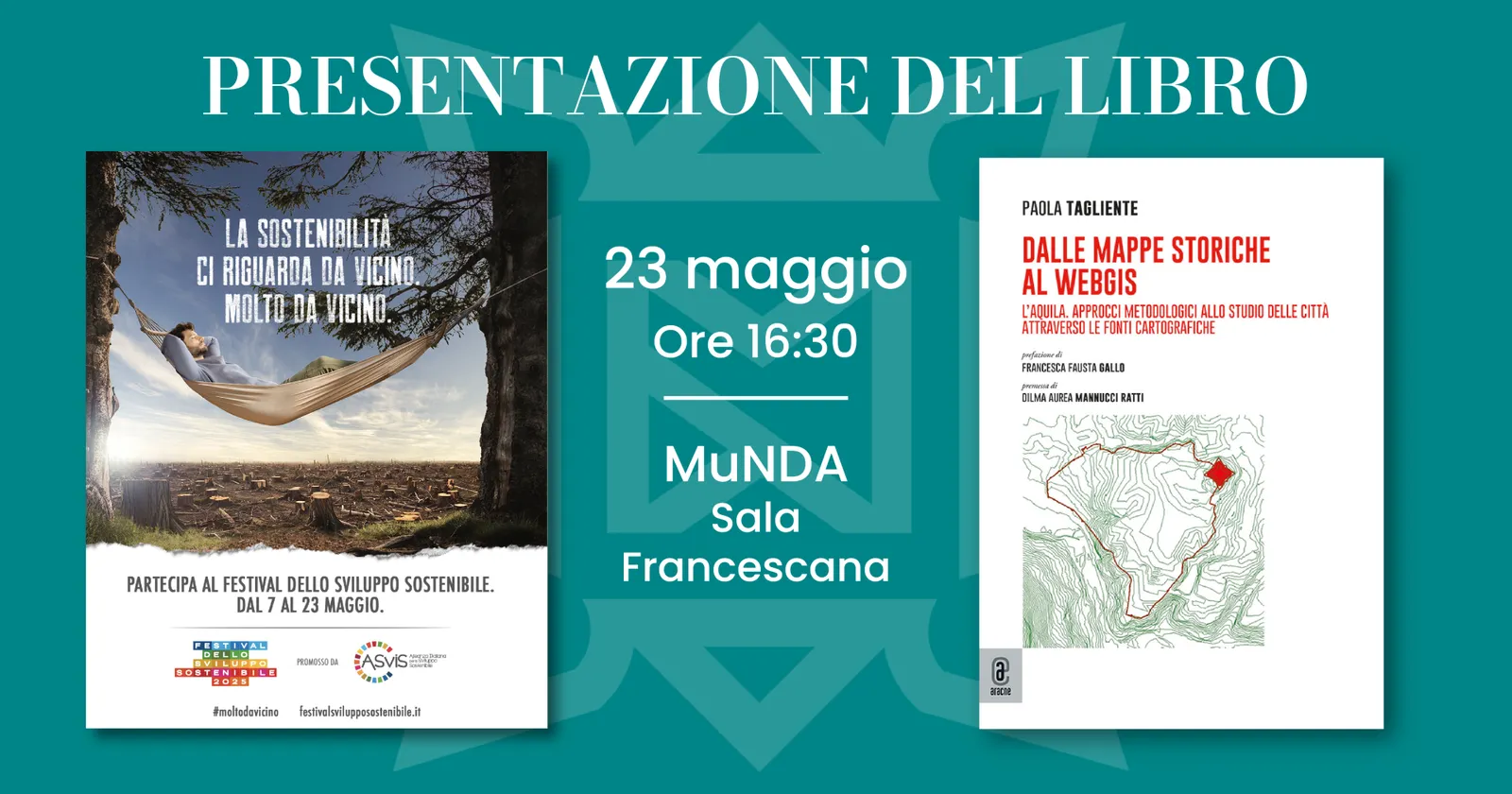
On May 23rd at 4:30 pm, the Museum will present Paola Tagliente’s book, “From Historical Maps to WebGIS. L’Aquila. Methodological Approaches to the Study of Cities Through Cartographic Sources.”
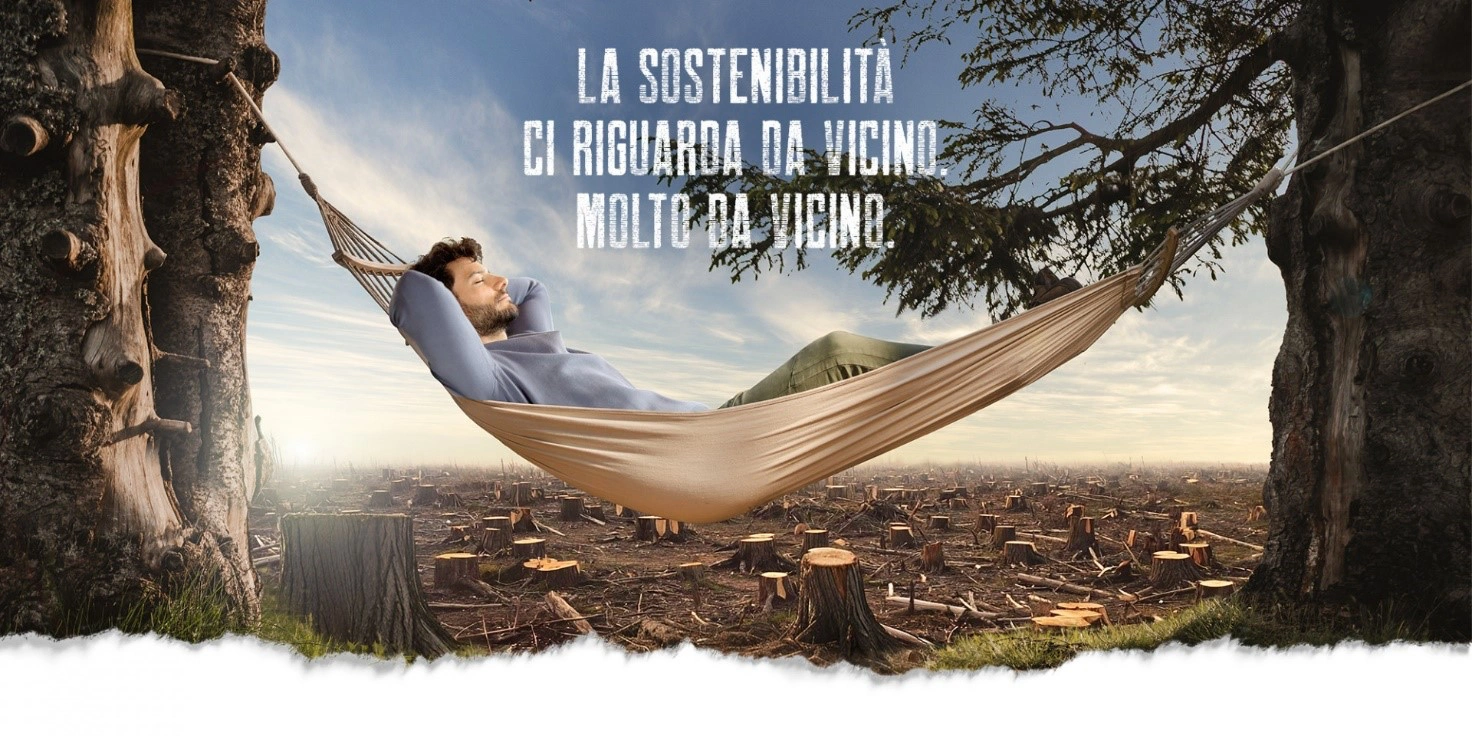
“Sustainability concerns us closely. Very closely.”
The campaign for this edition of the Festival, promoted by the Italian Alliance for Sustainable Development (ASviS), revolves around the concept of “nearby,” or rather, #verynearby: we are all the protagonists, with the aim of always prioritizing sustainability and the 17 goals of the 2030 Agenda.
The event, presented by MuNDA, has a clear and explicit connection to the themes of the 2030 Agenda and is related to the combination of two of the 17 Sustainable Development Goals: Goal 1, Goal 2, and Goal 3. 6. Clean Water and Sanitation and No. 11. Sustainable Cities and Communities.
“Water is, in fact, an essential element for the birth and development of a city, not only for its symbolic and religious implications, but above all because it is essential to maintaining livable conditions,” the author writes in her book.
Speakers
- Federica Zalabra, Director of MuNDA
- Paola Tagliente, author
- Francesca Fausta Gallo, Professor of Modern History and Director of the Department of Political Science at the University of Teramo
- Alfonso Forgione, Professor of Christian and Medieval Archaeology at the University of L’Aquila
The proposed presentation of the results of a European-funded research project as part of a doctoral program in European History from the Middle Ages to the Contemporary Age at the University of Teramo offers an opportunity to bring the issues of water and the quality of life of communities in sustainable urban contexts to the public’s attention.
Focusing on the city of L’Aquila, an urban area traumatized for centuries and continually subjected to natural events that have disrupted its social structure, the study was included in the publication of the volume “From Historical Maps to WebGIS. L’Aquila.” Methodological approaches to the study of cities through cartographic sources, published by Aracne in October 2024.
The work demonstrates how the presence of water was crucial in the choice of site for the city’s founding and how it has always represented a fundamental resource and driving force from a socio-economic perspective. This is demonstrated by evidence from written and cartographic sources, both historical and contemporary, which have been incorporated into digital products featuring water and L’Aquila’s fountains. These products are an example of multimedia output that can be useful for various purposes. First and foremost, to bring citizens closer to their history and traditions. Indeed, L’Aquila, and especially its medieval center, more than 15 years after the last devastating earthquake, still appears like an urban construction site from which, especially the younger and younger generations, risk remaining permanently distant and whose importance and beauty they are almost unaware of.
Second, they can provide the scientific basis for the development of thematic itineraries related to water, fountains, and the development of activities related to this precious resource. These itineraries would be useful for improving the cultural offerings for tourists, currently the primary consumers of the city’s architectural and historical-artistic beauty. However, it is the “local community” that could benefit most from a new sense of self and a renewed desire to care for its places and traditions.
This is therefore a propitious opportunity to spread the culture of sustainability and stimulate cultural and, hopefully, political change.
Paola Tagliente is a medieval archaeologist with a PhD in Modern History. Since the 1990s, she has participated in and directed archaeological excavations and research in Italy and abroad, particularly in Greece, Turkey, and Ukraine. She has collaborated on research projects at the Universities of Bari, Matera, Lecce, Tuscia, Siena, Montpellier, and Texas.
The author of numerous scientific publications, she has been a Research Fellow of the Puglia Region, a tutor for the Interdisciplinary Master’s Degree in Diagnosis and Conservation of Archaeological Materials at the CNR (National Research Council) and the Master’s Degree in Preventive Archaeology and Archaeological Risk Management at the LUISS Business School, and a Teaching Fellow in Medieval Archaeology and Modern Archaeology at the University of Lecce.
She currently collaborates on digital humanities projects with the interdepartmental research center HistoryLab at the University of Teramo and with project groups throughout Italy in the field of archaeological and landscape protection.
Her book on L’Aquila is the result of work begun as part of her PhD in European History from the Middle Ages to the Contemporary Age at the University of Teramo, and subsequently continued within the scope of HistoryLab.