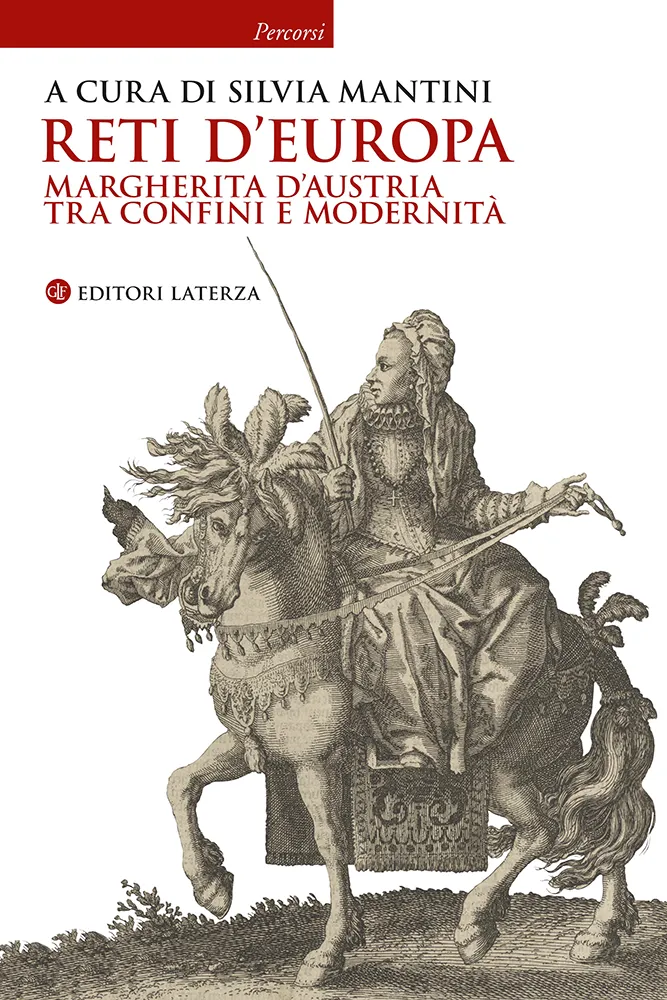
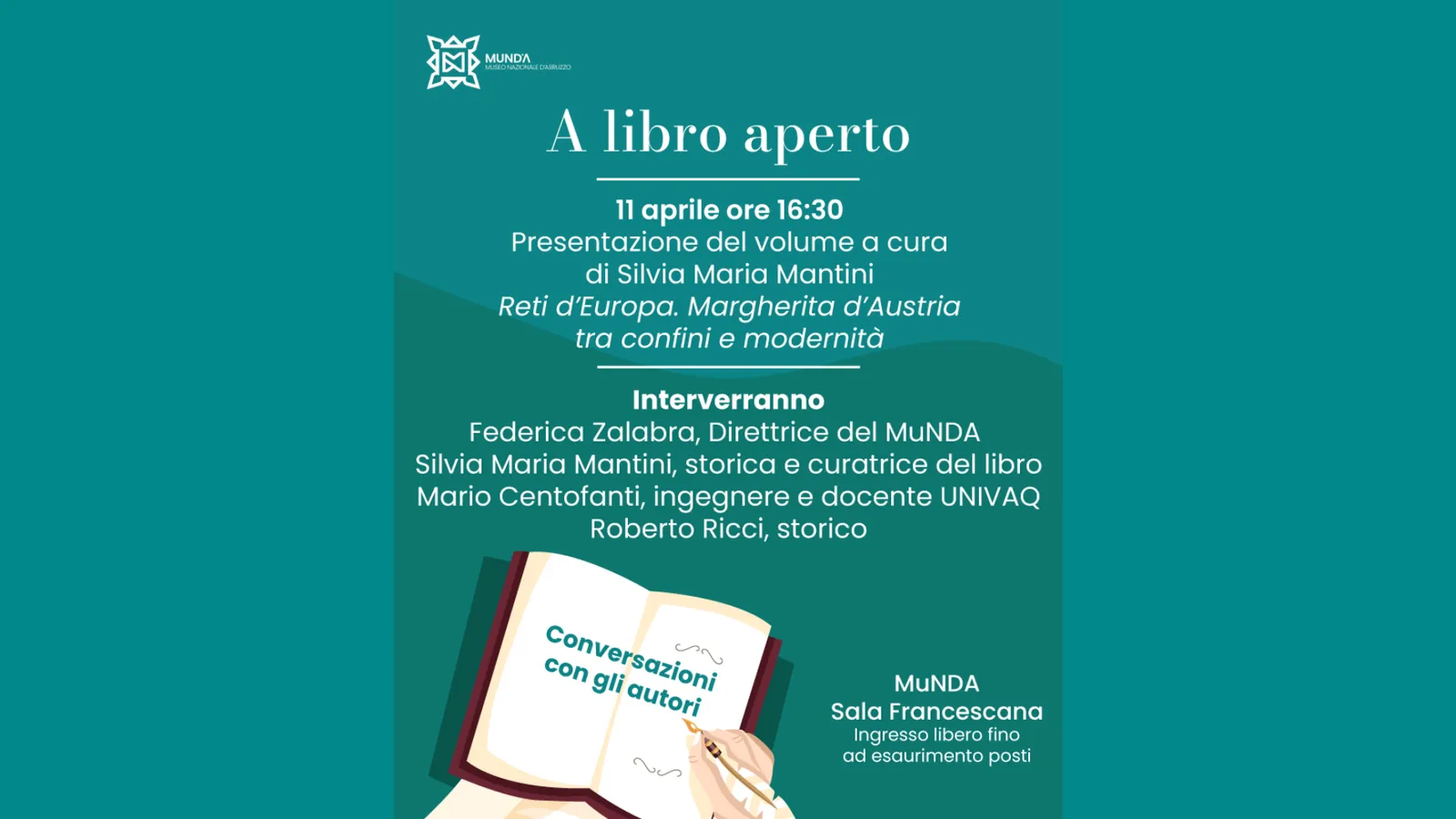
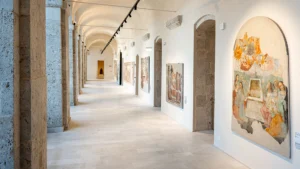
April 11, 2025, 4:30 PM Presentation of the book by Silvia Mantini, “Networks of Europe. Margaret of Austria between Borders and Modernity.”
Amid the tumultuous landscape of the 16th century, Margaret of Austria emerged as a key figure in European politics and culture. The illegitimate daughter of Emperor Charles V, she grew up at court in Flanders, experiencing a life filled with challenges and acclaim, intertwining her destiny with the great dynasties of the era.
This book explores, through new perspectives and research, the multifaceted role of Margaret of Austria, exploring her diplomatic skills between the emperor and popes, between husbands—the Medici and the Farnese—and duchies, as well as her commitment as a governor and her entrepreneurial flair, also through the rich correspondence and solid relationships she forged with the leading figures of the time, diplomats, politicians, and clerics.
More than just a woman of power, Margaret, always attentive to the fate of women, connected different cultures in European courts, straddling boundaries destined for modern mobility.
Speakers
Federica Zalabra, Director of MuNDA
Silvia Mantini, historian and editor of the volume “Networks of Europe. Margaret of Austria between Borders and Modernity”
Mario Centofanti, engineer and professor at the University of L’Aquila
Roberto Ricci, historian
Silvia Mantini teaches Modern History at the University of L’Aquila. She has studied and conducted research in Florence, Pisa, Milan, L’Aquila, at the University of Wisconsin-Madison, and at the Simancas University Institute of History. She is the author of numerous publications on the relationships between institutions and society in the modern age and on Florence and the Medici, Courts and Ceremonies, the Inquisition, Margaret of Austria, Spanish L’Aquila, and female culture and religiosity. Recently, after the 2009 earthquake, she published research related to Disaster Studies and Digital Humanities. A former member of the board of directors of the Italian Society for the History of the Modern Age and the Italian Association of Public History, he is a member of numerous national and international scientific committees and research groups.