

To know
About artworks
Title
Date
Dimensions
Origin
Collection
Location
Position
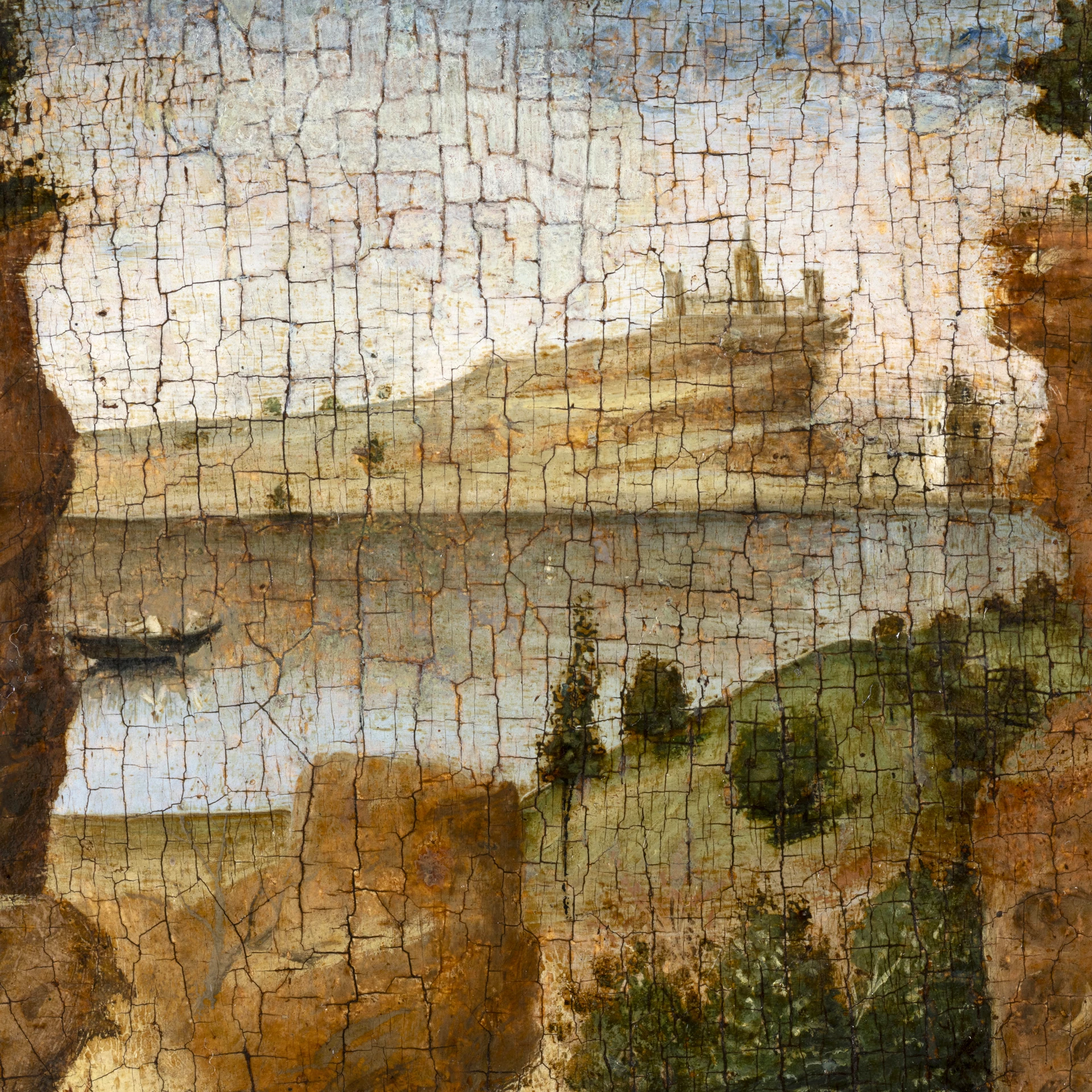
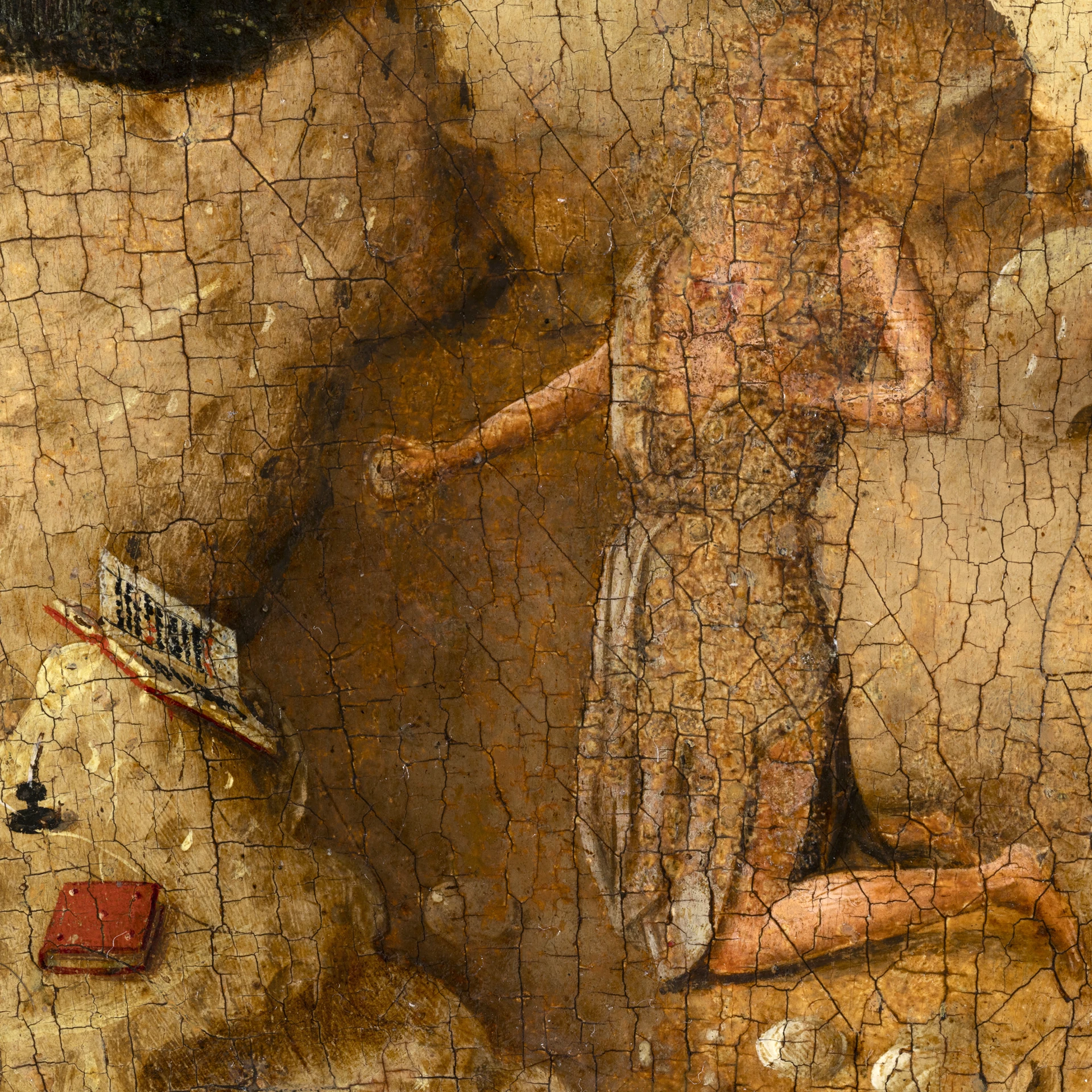
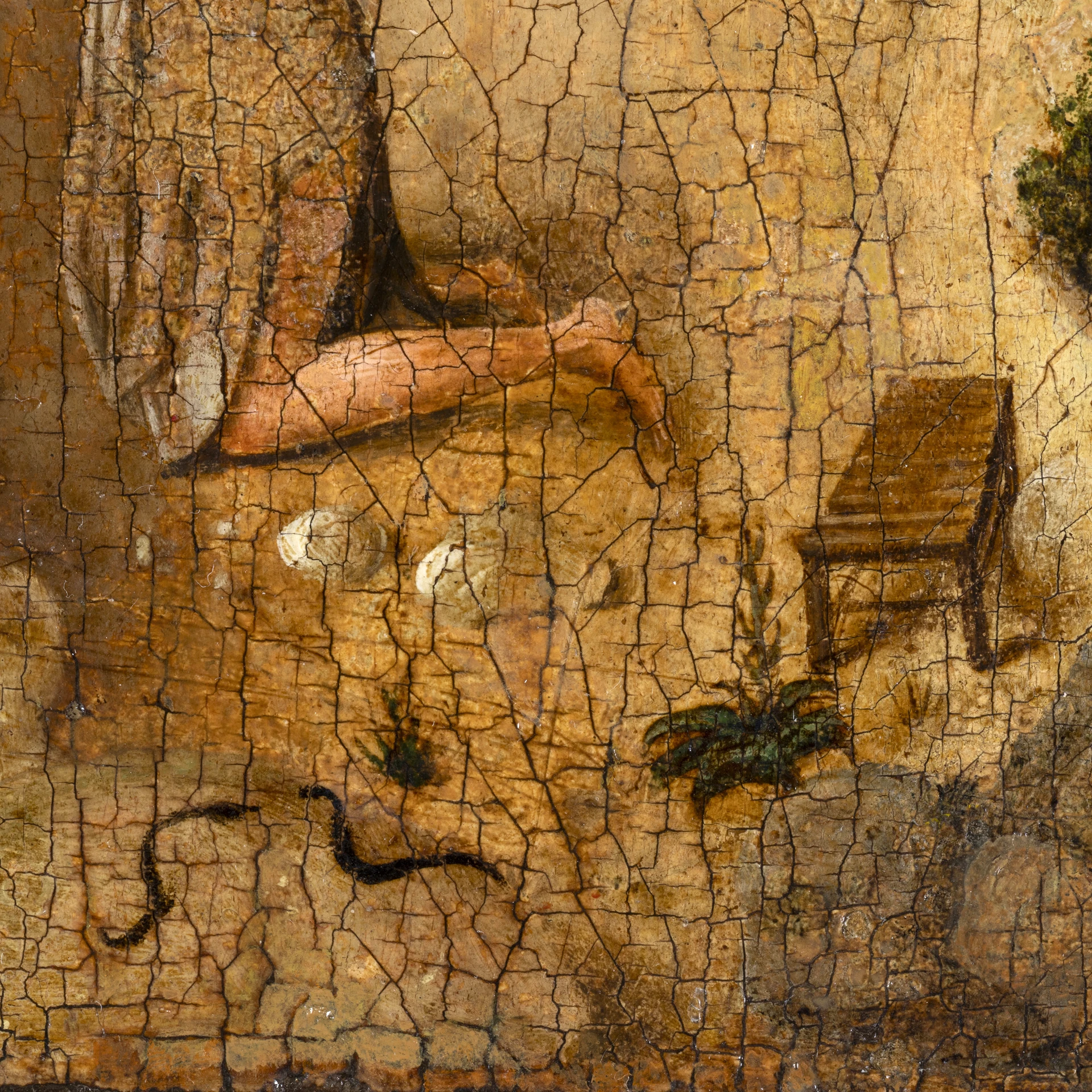
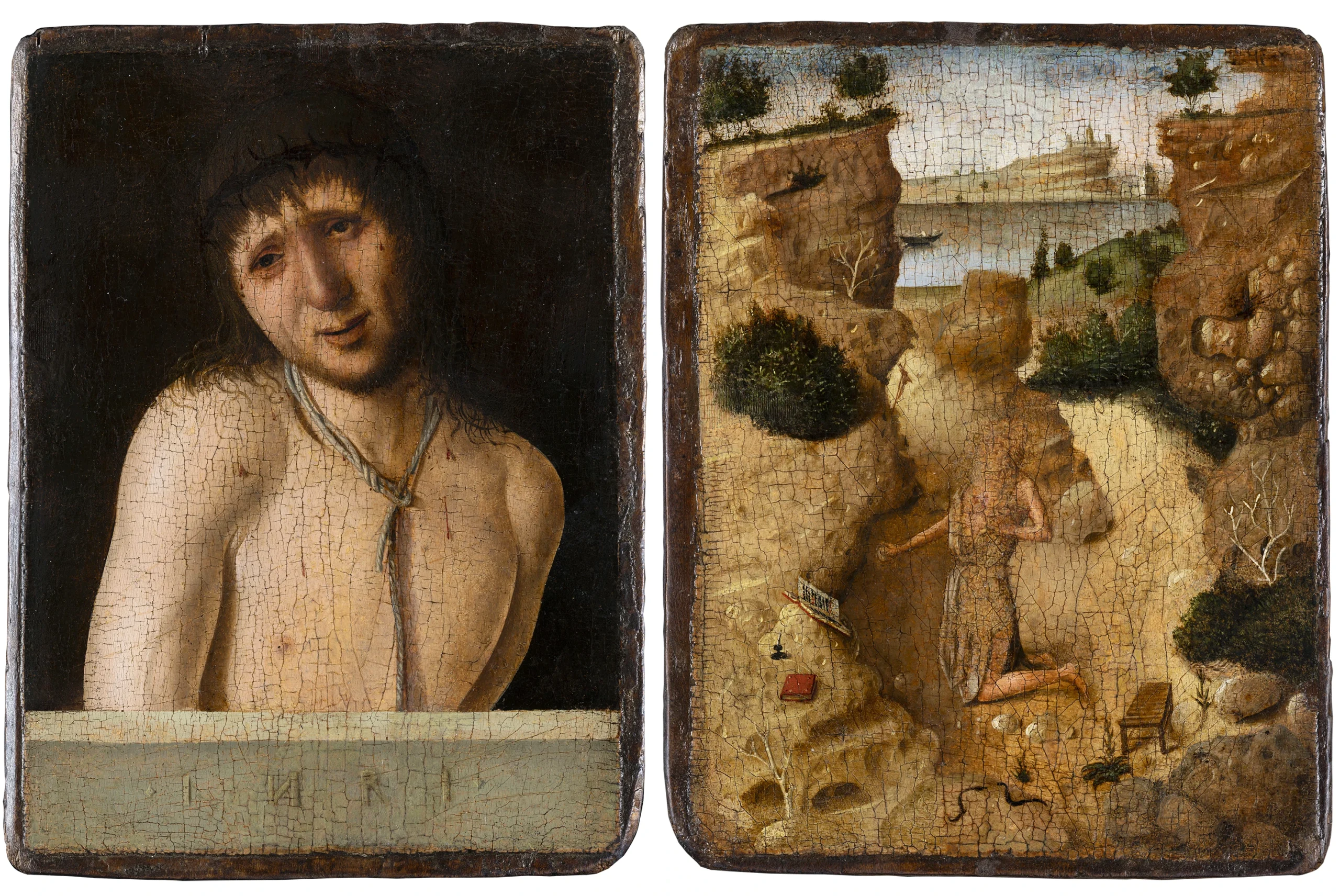
This small double-sided panel was first presented in 1981 by the art historian Federico Zeri at a conference devoted to Antonello da Messina. At the beginning of the twentieth century, before entering the Wildenstein collection in New York, the painting appears to have been kept in Spain. In February 2026, it was acquired by the Italian Ministry of Culture and assigned to the Museo Nazionale d’Abruzzo in L’Aquila.
The extremely small dimensions of the panel and the choice of subjects strongly suggest that it was intended for private devotion. The owner may have carried it in a small pouch of cloth or leather and used it as a focus for personal prayer and meditation.
The recto shows Ecce Homo, Christ presented to the crowd after the scourging. He appears half-length behind a marble parapet bearing the inscription INRI, rendered as if carved in stone. Antonello introduces a striking compositional device: Christ’s body is slightly turned and inclined forward, giving the figure a sense of restrained movement and physical immediacy.
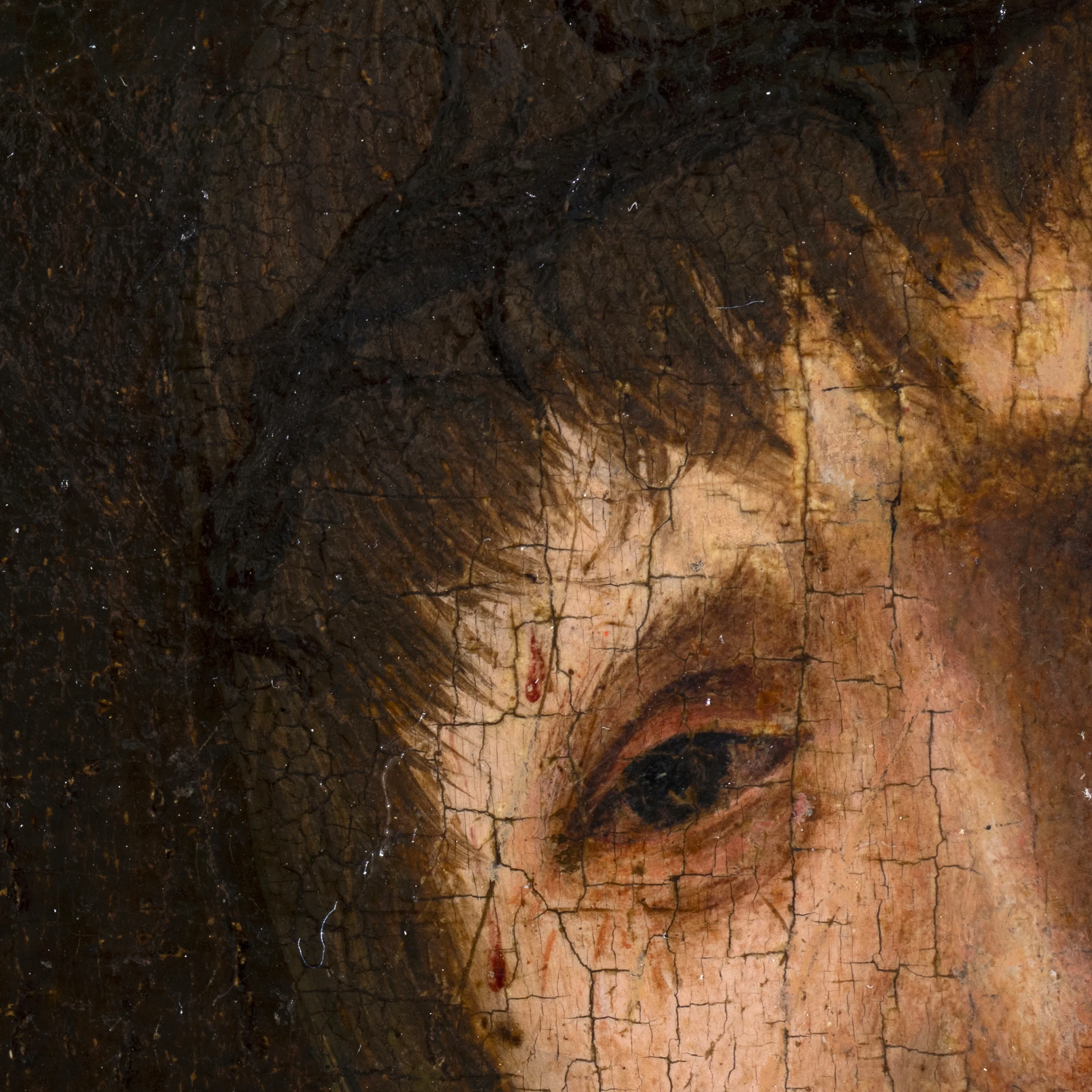
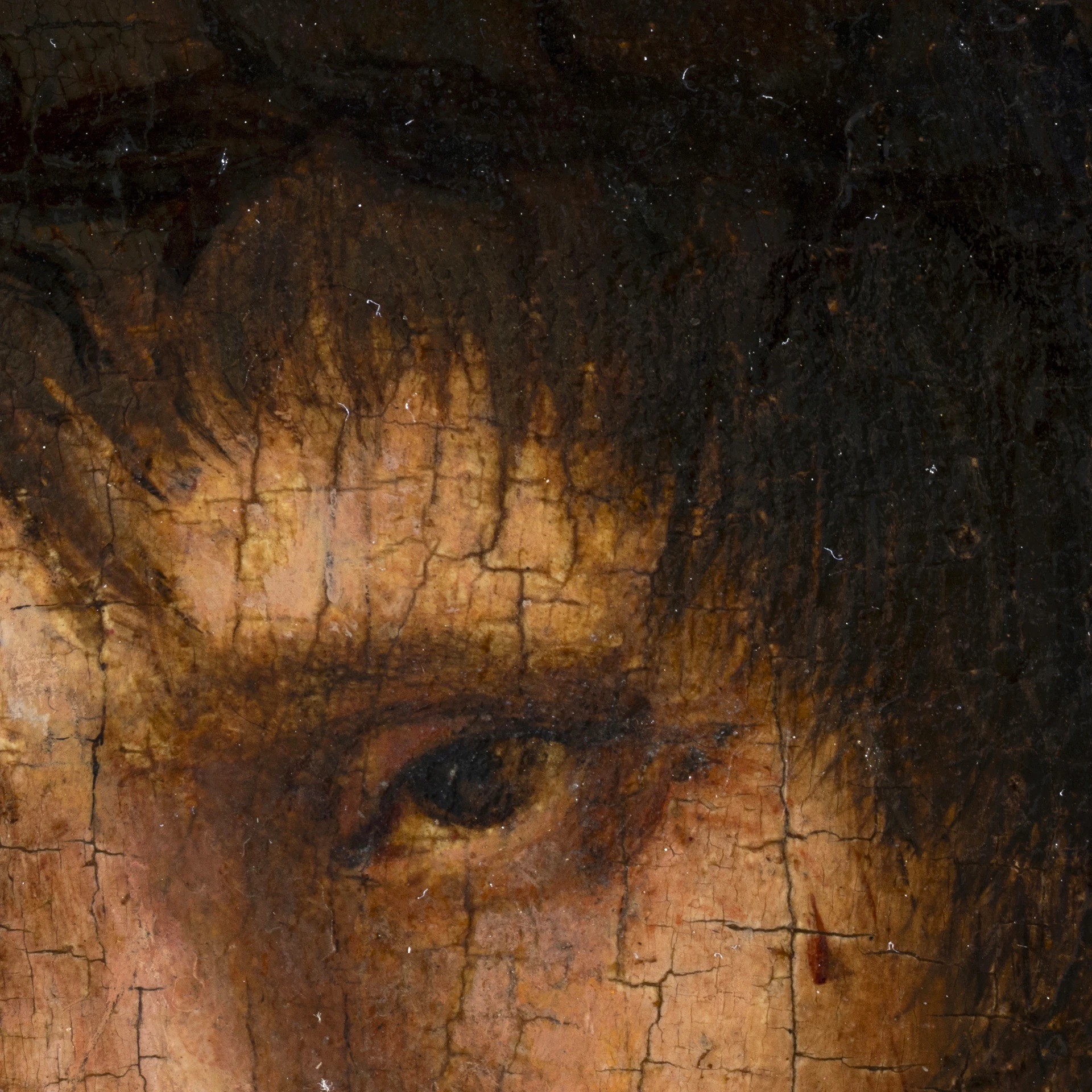
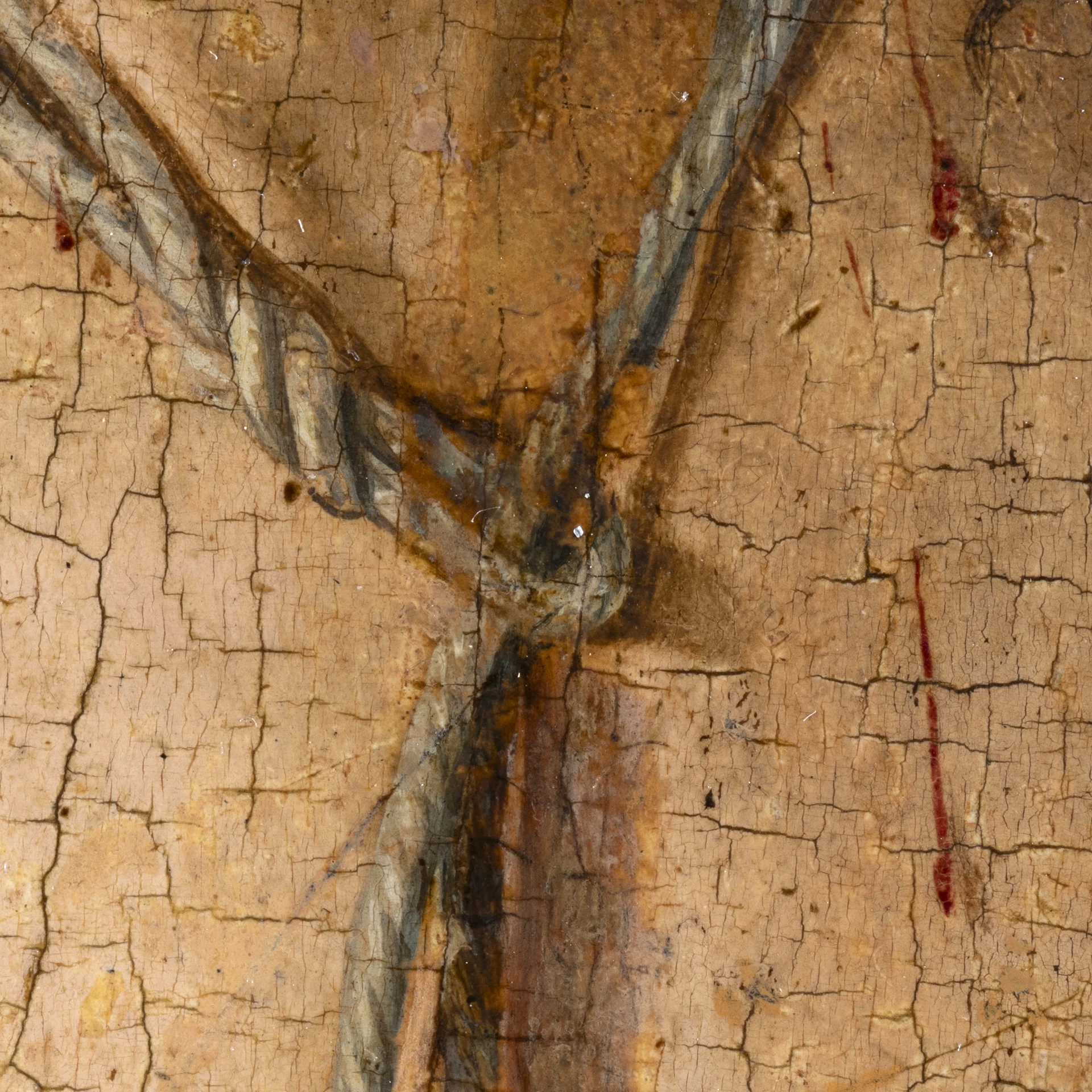
The crown of thorns, the drops of blood running down his face and chest, and the rope around his neck allude to the violence he has just endured. Yet the expression is not dramatically distorted. Instead, Christ’s tear-filled eyes and slightly parted lips establish a direct emotional dialogue with the viewer, encouraging a contemplative response.
Light plays a crucial role in shaping the image, softly modelling the torso and left shoulder against a dark background. This refined handling of light and volume reveals Antonello’s distinctive synthesis of Italian pictorial traditions and northern European influences.
The reverse depicts Saint Jerome kneeling in a harsh desert landscape in front of a slender crucifix set into the rock. He holds a stone in his hand, the traditional instrument of his penitential practice. Nearby there are books, an inkwell and a pen, referring to his scholarly work and to his translation of the Bible into Latin, the Vulgate.
The landscape unfolds progressively from foreground to background. In the foreground, the terrain is rocky and barren, punctuated by sparse vegetation and small serpents that evoke the hostility of the desert environment. Further back the scenery becomes gentler: a grassy hill leads towards a stretch of water crossed by a small boat, while in the far distance a fortified city rises on a rocky outcrop.
This attention to landscape reveals a dialogue with contemporary Netherlandish painting, such as that of Jan van Eyck and Rogier van der Weyden, influences that Antonello may have encountered through works present in Naples at the Aragonese court. Nevertheless, the atmospheric treatment remains highly individual and distinct even from local precedents associated with Colantonio.
The heavily worn condition of the image of Saint Jerome suggests that this side of the panel was frequently kissed during devotional practice, a gesture commonly associated with late-medieval private worship.
The painting belongs to the spiritual climate of the devotio moderna, which promoted a deeply personal relationship with Christ through meditation, prayer and the reading of Scripture. In this context the panel functioned not simply as an illustration of sacred subjects, but as a meditative object, encouraging the viewer to contemplate Christ’s suffering alongside Jerome’s example of ascetic devotion.
If you care about the National Museum of Abruzzo and would like to help protect and enhance its collections, please make a donation.