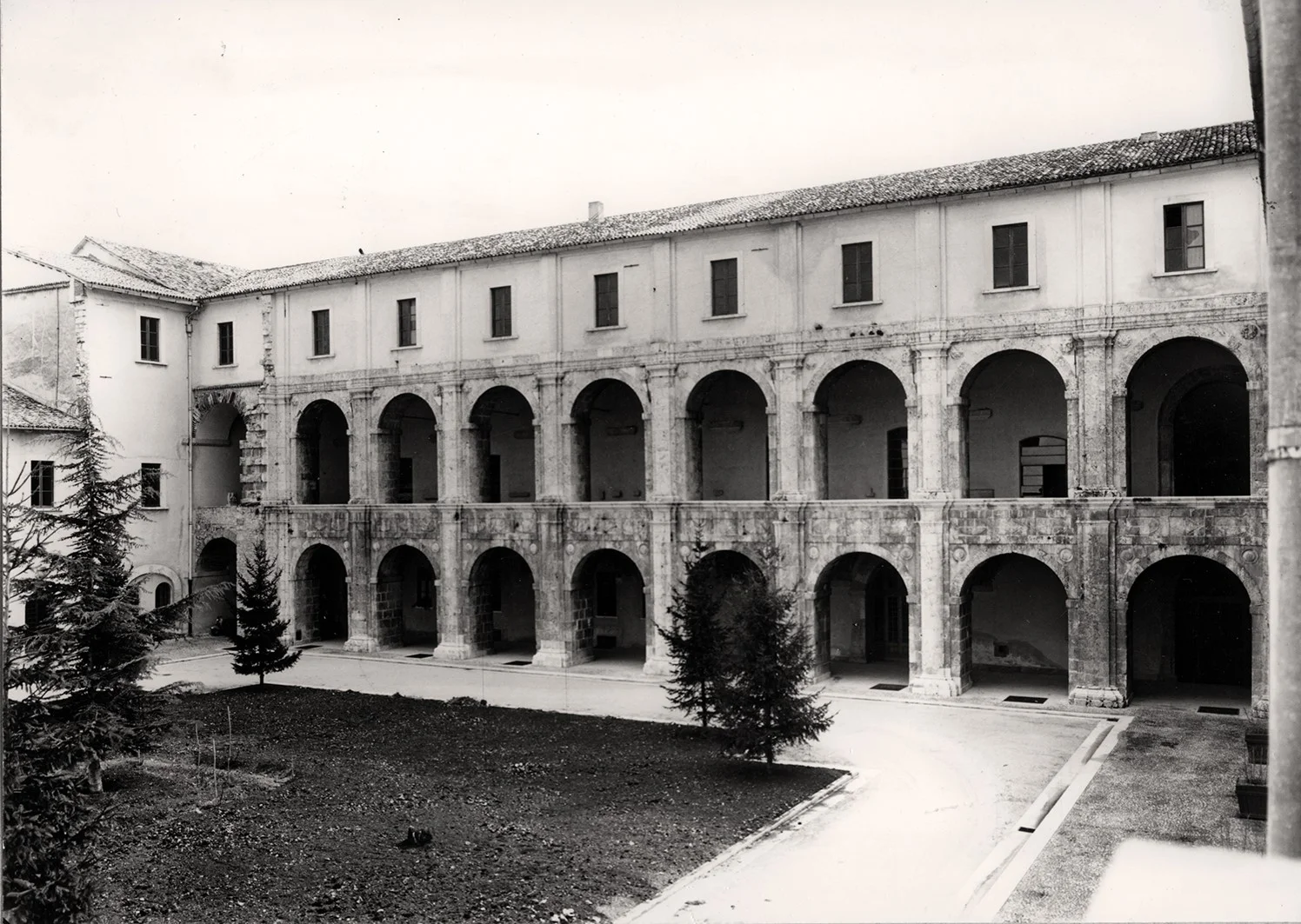
Description
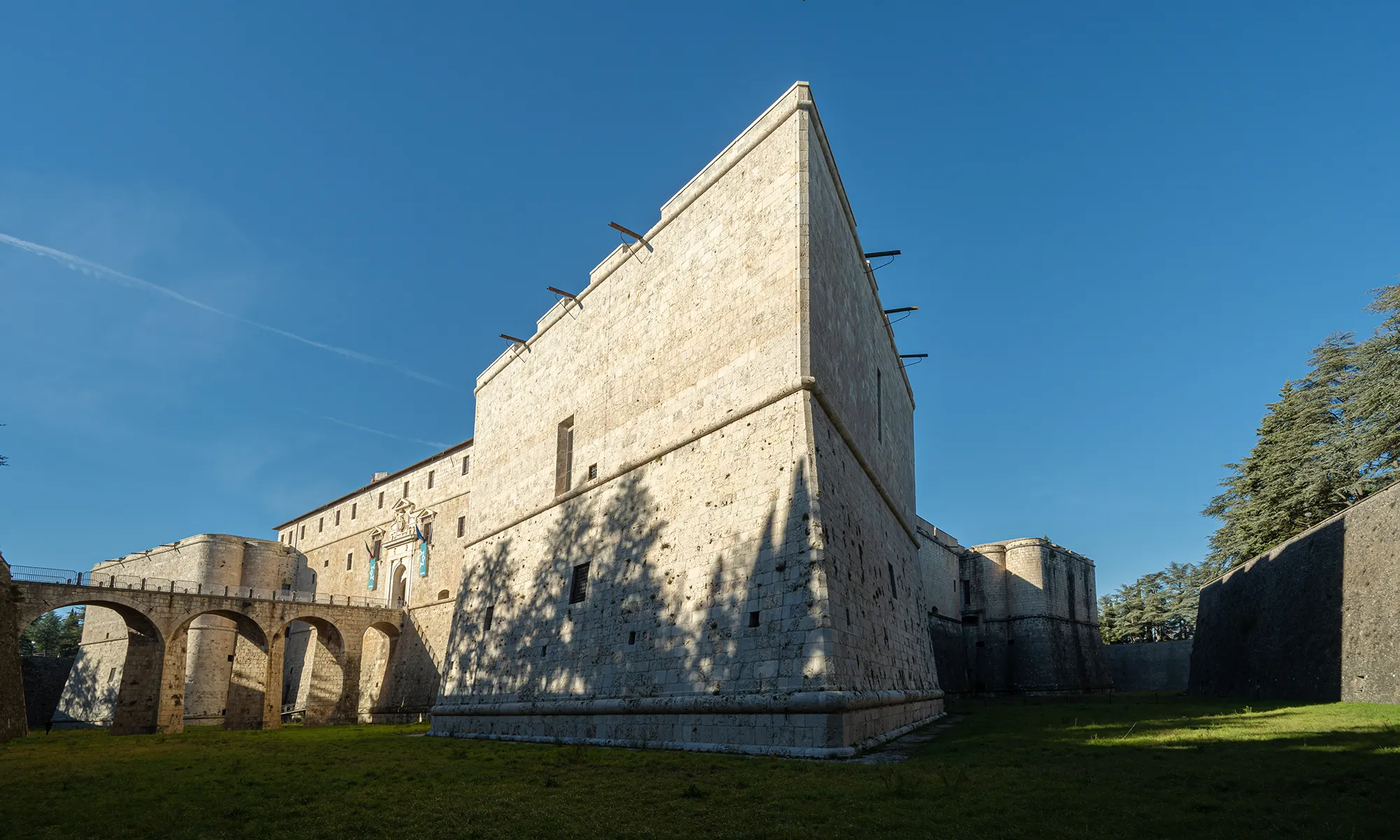
The sixteenth-century castle of L’Aquila was the historic home of the National Museum of Abruzzo from 1951 until the earthquake of April 6, 2009, which led to the closure of the museum and its subsequent relocation to the architectural complex of the former municipal slaughterhouse of L’Aquila.
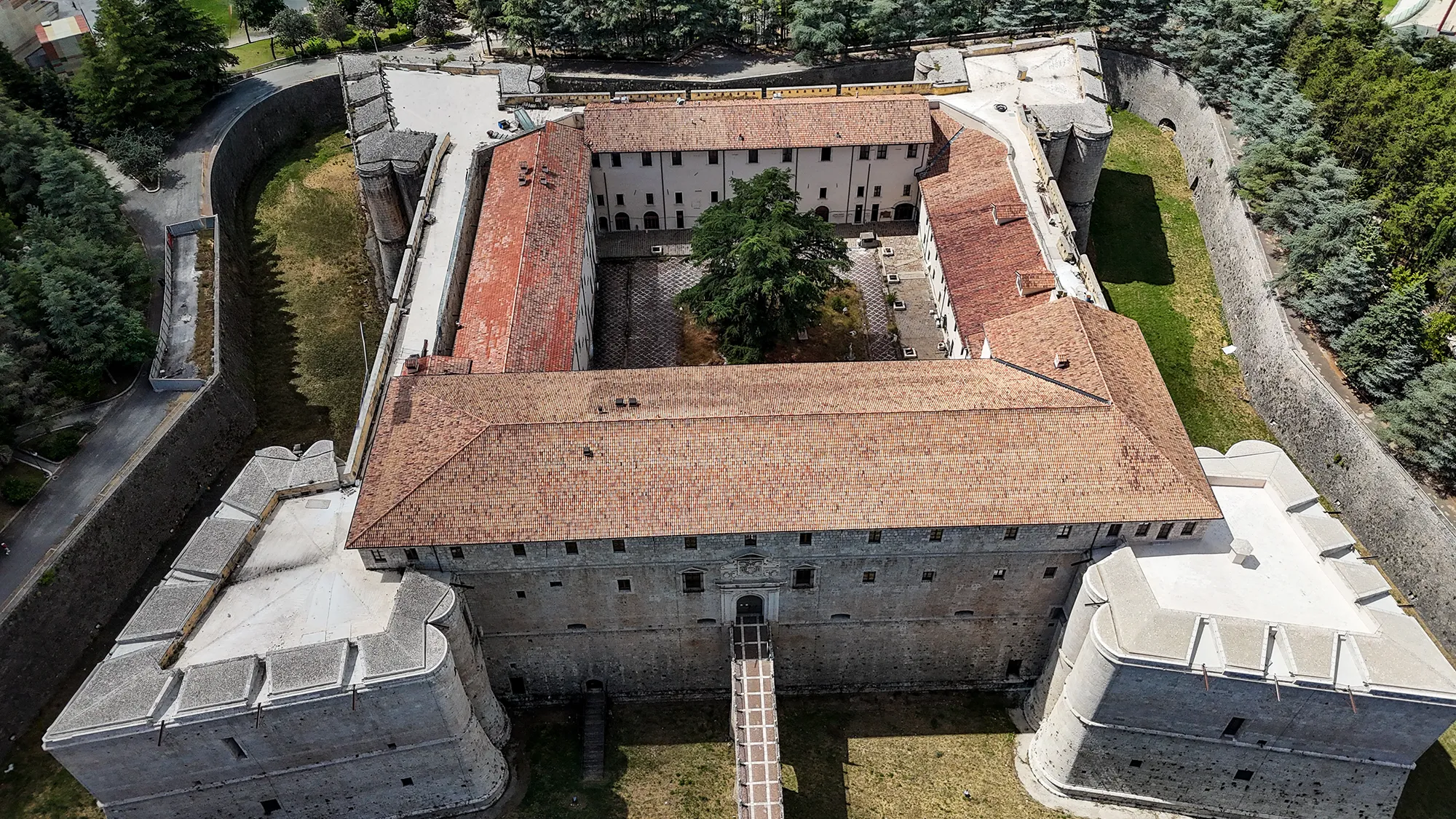
Built between 1534 and 1567 at the behest of Emperor Charles V of Habsburg by the Spanish architect Pedro Luis Escrivá, it was for centuries one of the mainstays of the defensive system of the Kingdom of Naples, which had become part of the vast empire of the Habsburgs.
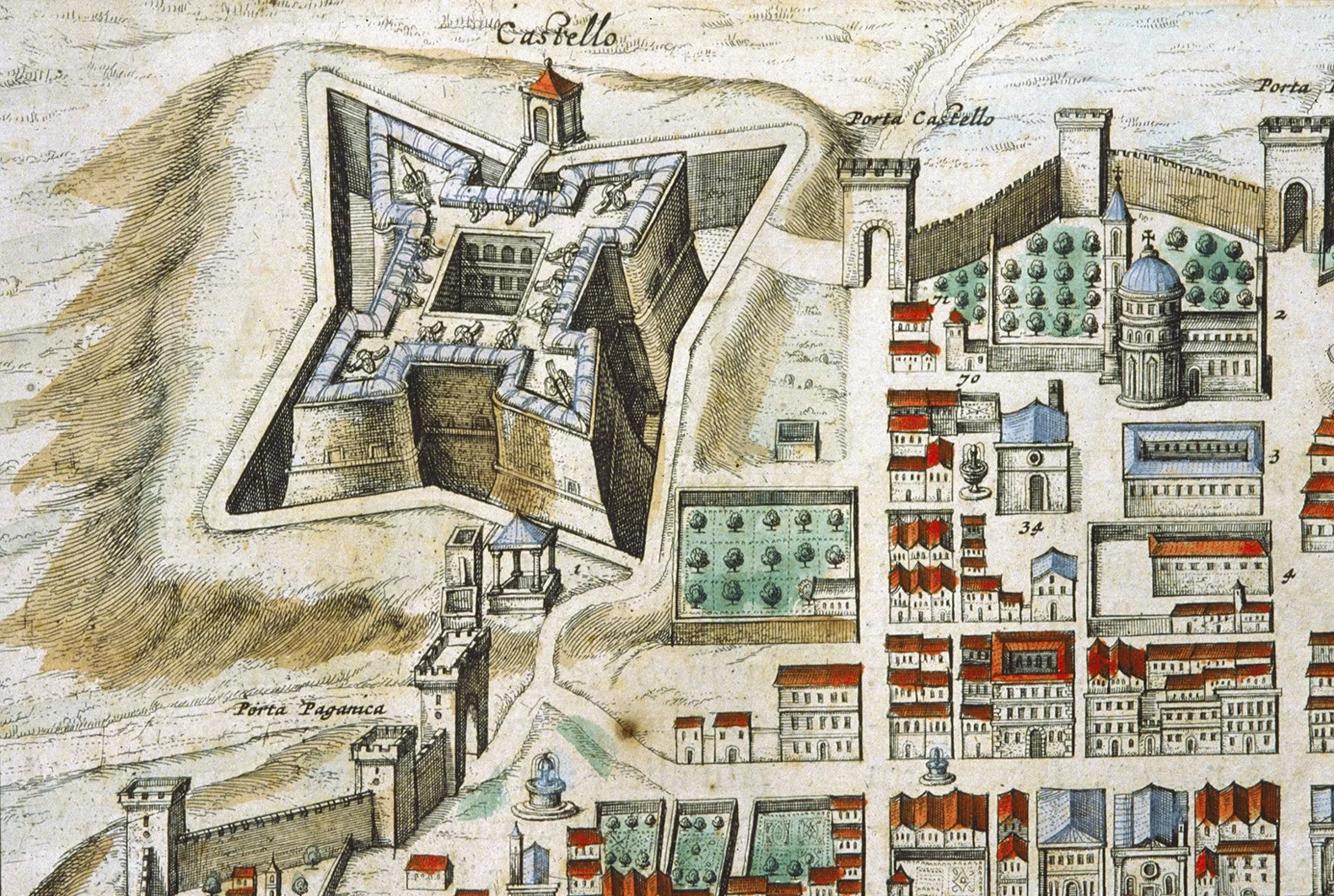
The construction history and architectural features of the immense fortress represent an exemplary historical testimony to the long conflict that, at the beginning of the Modern Age, pitted the Spanish-Imperial bloc against the French monarchy, changing the structure of the European continent and upending the traditional mosaic of Italian regional states.
Built on an innovative square plan with massive corner bastions, connected to the curtain walls by pairs of semi-cylindrical trusses, it served as a model for military engineers for defense works across a vast area, from Tunisia to Flanders, from Germany to the Spanish colonies in America.
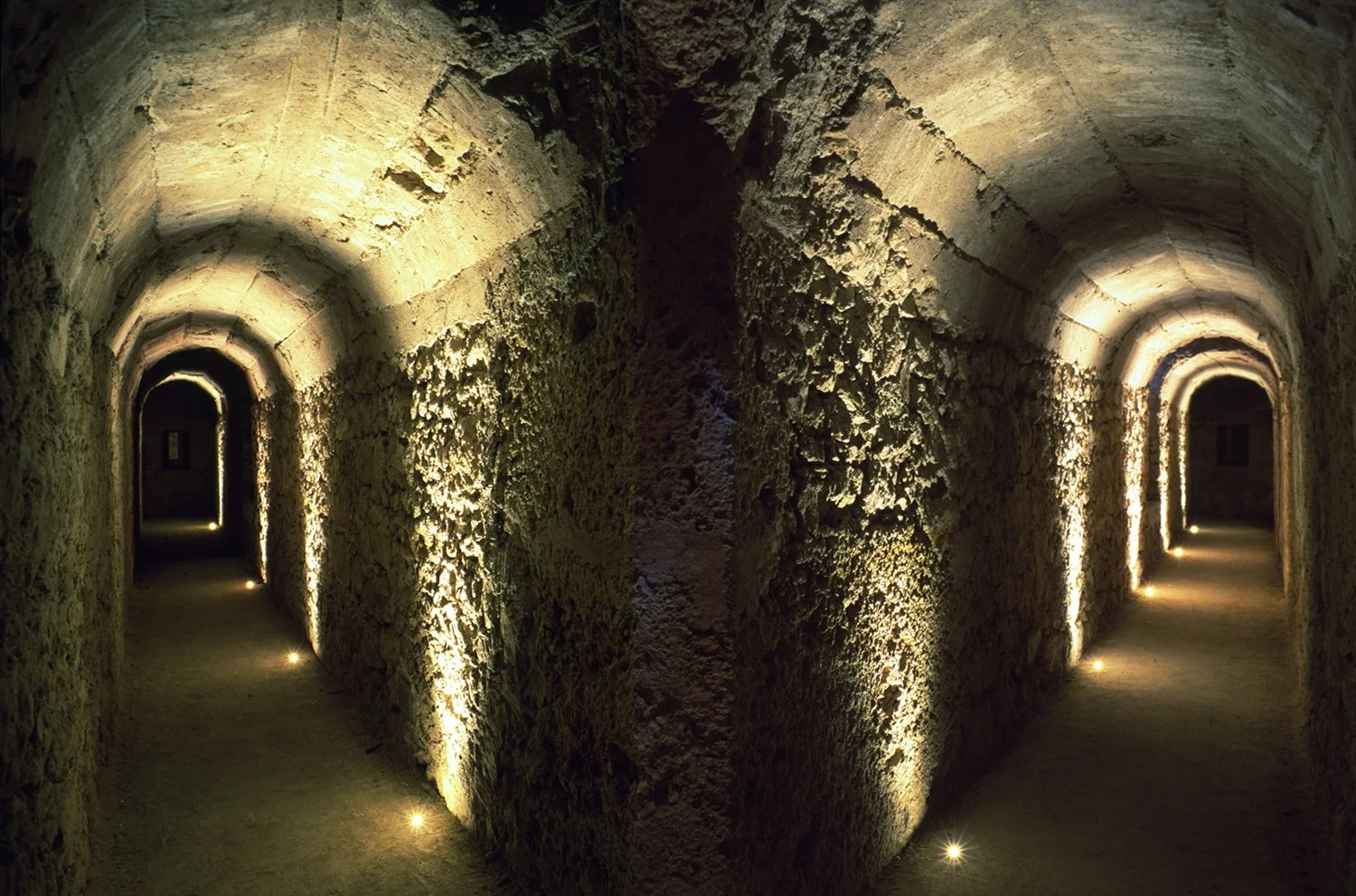
Restoration work carried out over the years to adapt the building to its new cultural use has left much of the interior virtually intact, such as the cordoned staircase leading to the basement, the “sorties” into the moat, the narrow and labyrinthine countermine walkways, the narrow internal stairways connecting the bastions, and the secret prison, on whose vault the inscriptions scratched by prisoners over the course of two centuries are still legible.