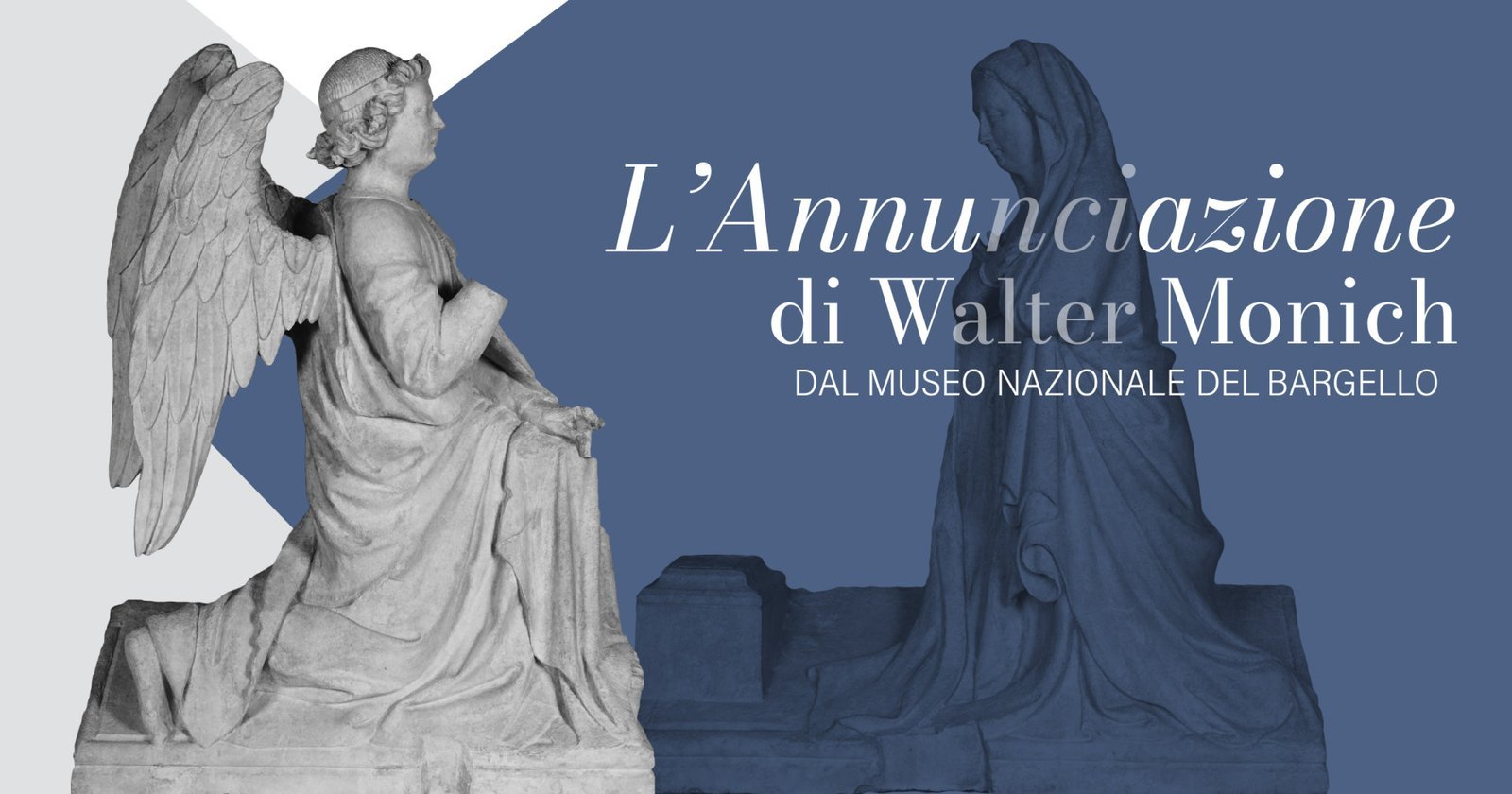
The result of a close institutional collaboration between the Bargello Museums in Florence and the Museo Nazionale d’Abruzzo in L’Aquila, as part of the National Museum System, a project coordinated by the General Directorate of Museums of the MiC, Walter Monich’s Annunciation, a sculptural group created around 1410-1415, will be presented at MuNDA on Tuesday, December 17th at 11:00 am, in the presence of authorities and media. It will be on view during opening hours starting Wednesday, December 18th.
Thanks to this partnership, strongly supported by the General Director of the Museums, Professor Massimo Osanna, an agreement has been reached between the two museums, L’Aquila and Florence, which provides for the work’s deposit at MuNDA for a renewable ten-year period.
“The National Museum System is also enriched by virtuous collaborations between its institutions, such as the one we are presenting today,” said Massimo Osanna, Director General of the MIC Museums and Acting Director of the Bargello Museums. “This initiative involves the long-term deposit of the sculptural group of the Annunciation, recently attributed to Walter Monich, from the Bargello National Museum, where the Donatello Hall is undergoing major restoration and reorganization work, to the National Museum of Abruzzo. This operation will allow not only visitors, but also the scientific community, to rediscover an important fifteenth-century Abruzzo work in its original context, fostering new connections with the museum’s collections and the rich heritage of the region.”
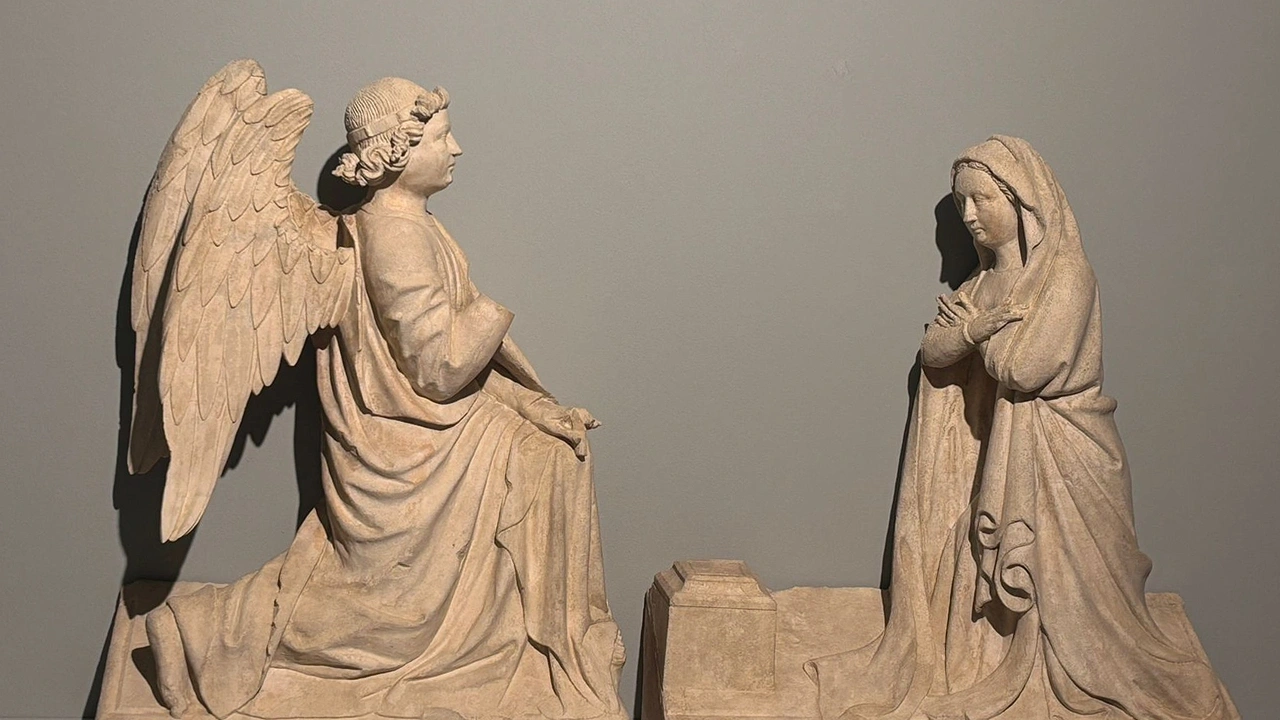
The Annunciation group, carved from Majella stone and long attributed to the Abruzzo goldsmith, sculptor, and painter Nicola da Guardiagrele, consists of two separate panels representing the Angel of the Annunciation and the Virgin of the Annunciation. It originates from a shrine located in a private garden in Tocco da Casauria (Pescara). Designed to be placed against a wall due to its unworked back, the sculpture was likely originally part of a portal decoration. Once it entered the national market, intervention by the Ministry of Education was sought to prevent the sculpture’s export to America. Thus, in the spring of 1907, the work was acquired by the Italian government. Given the lack of a state museum in Abruzzo at the time that could adequately preserve and exhibit it, it was assigned to the Bargello National Museum in Florence, the institution responsible for displaying sculpture collections.
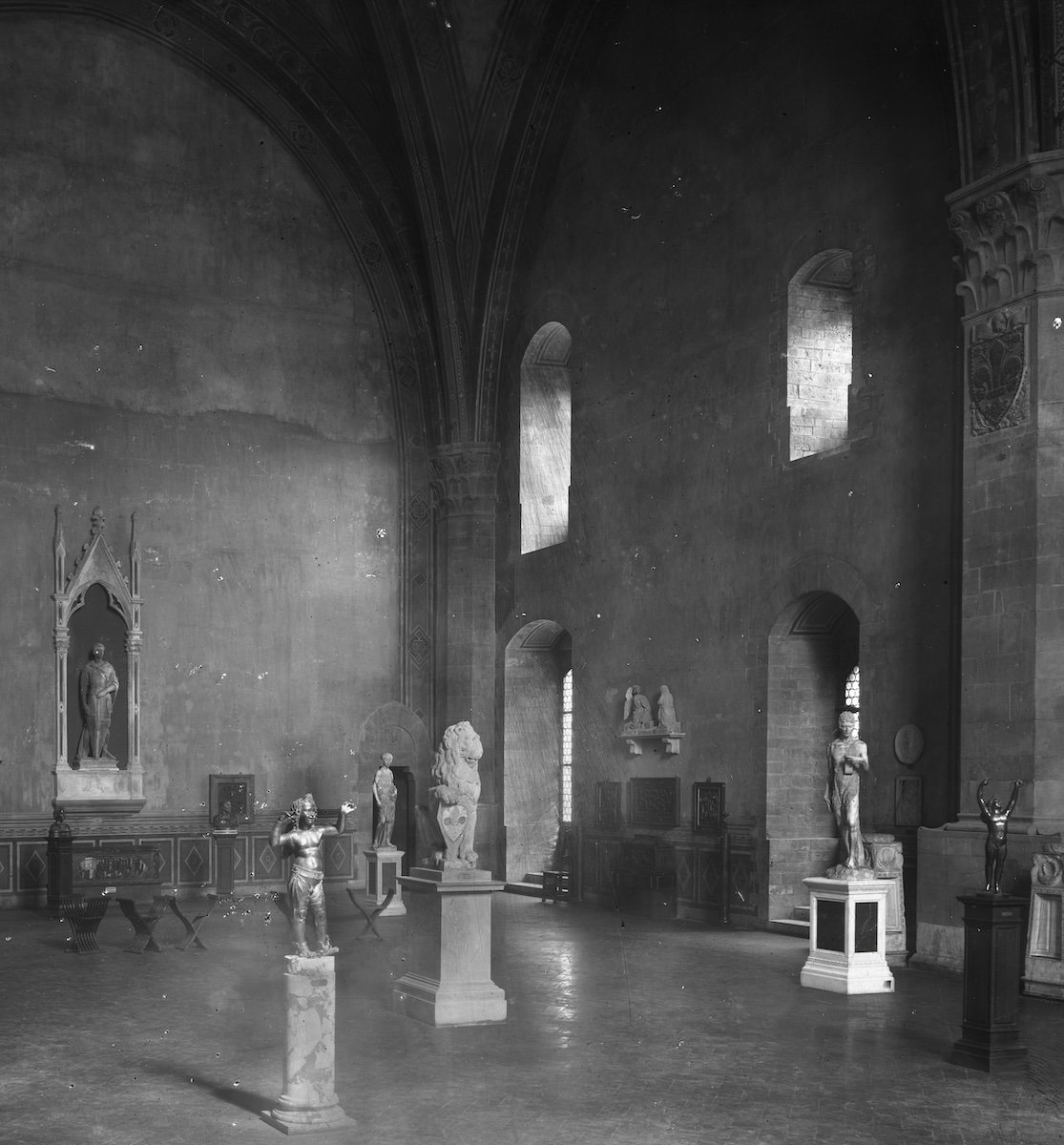
From the very beginning, the group was housed in the Donatello Hall of the Florentine museum, together with other masterpieces of 15th-century statuary, placed on a high shelf to simulate its probable original location, as shown in a period photograph preserved in the Bargello Photographic Archive.
“Brought to the Bargello National Museum in 1907, this evocative Annunciation was placed in the Salone di Donatello to narrate—along with other sublime masterpieces—the transition from the Gothic to the Renaissance. Recently attributed to Walter Monich, the work is now leaving its museum and will remain away for several years. But its return to Abruzzo is a return to its origins, which is happening thanks to the initiative of Director General Prof. Massimo Osanna, and to which the Bargello Museum is happy to contribute, depriving itself of an important sculpture that will nonetheless constitute a new jewel in the crown of the National Museum of Abruzzo.” These are the words of Ilaria Ciseri, official responsible for the collections of the Bargello National Museum.
The work has recently been attributed to the German sculptor Walter Monich, also known as Gualtiero d’Alemagna, a German sculptor probably originally from Munich, documented between 1399 and 1412. After a decade of activity for the Veneranda Fabbrica del Duomo di Milano, where between 1403 and 1407 he coordinated a team that grew to three hundred stonemasons, working primarily on the pillars of the central cross and the northern transept of the Milanese cathedral, Walter Monich moved south in 1410, making his first stop in Orvieto, where he was active on the cathedral construction site.
In 1412 he signed as “magister Gualterius de Alamania” the Monument of the Caldora family in the Badia di Santo Spirito al Morrone in Sulmona, and probably three years later he executed the Monument of Niccolò di Giacobuccio Gaglioffi in the church of San Domenico in L’Aquila, unfortunately lost due to the earthquake of 1703. More problematic, however, is the attribution to Monich of the Tomb of Ludovico II Camponeschi in the church of San Biagio di Amiterno, today San Giuseppe Artigiano, also in L’Aquila, and dated 1432. In recent years, critics have proposed recognizing the sculptor’s hand also in the monumental San Giovanni Battista placed outside the Collegiate Church of Santa Maria Maggiore in Guardiagrele.
“We are delighted and honored by this deposit from the Bargello Museums. The display of the Annunciation in our rooms further underscores the role of the National Museum of Abruzzo in L’Aquila as custodian and interpreter of the art of the entire region” stated Dr. Federica Zalabra, Director of the National Museum of Abruzzo in L’Aquila.