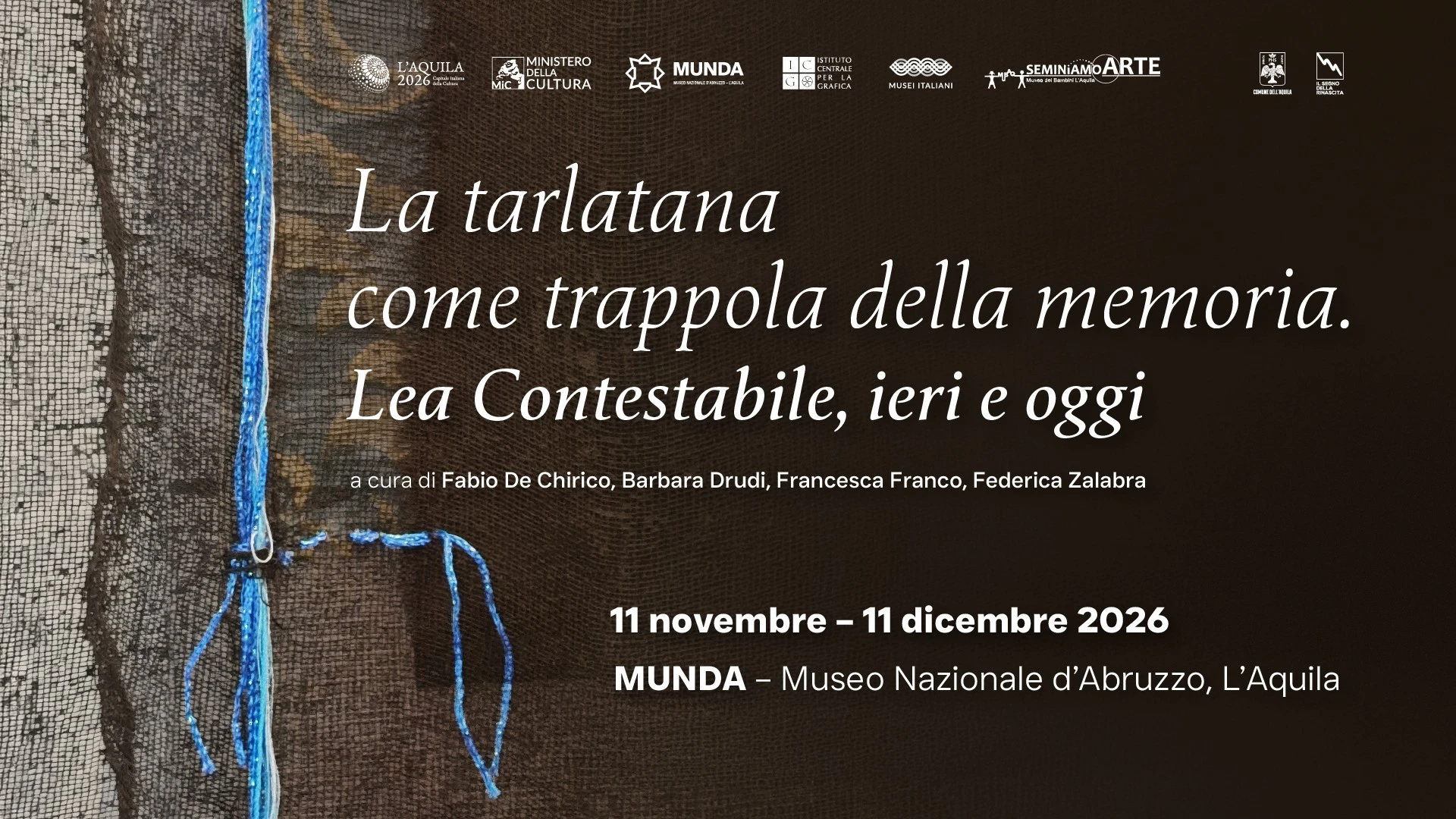
This morning at 11:00 a.m., the exhibition La tarlatana come trappola della memoria. Lea Contestabile, ieri e oggi (“Tarlatan as a Trap for Memory: Lea Contestabile, Yesterday and Today”)—curated by Fabio De Chirico, Barbara Drudi, Francesca Franco, and Federica Zalabra—was presented to the press in a preview at the National Museum of Abruzzo.
The exhibition is the result of a collaboration between the National Museum of Abruzzo, the Central Institute for Graphics in Rome, and MuBAq (Children’s Museum of L’Aquila). It is part of the Seminiamo Arte (“Sowing Art”) project—included in the program for L’Aquila as the Italian Capital of Culture 2026 and supported by the Municipality of L’Aquila—and serves as the culmination of an anthological series dedicated to Lea Contestabile (born in Ortucchio, L’Aquila, 1949) throughout 2026. This comprehensive exhibition project has spanned various institutional venues in the capital of Abruzzo as well as several towns in the province, mapping out an extensive journey through the artist’s research and body of work.
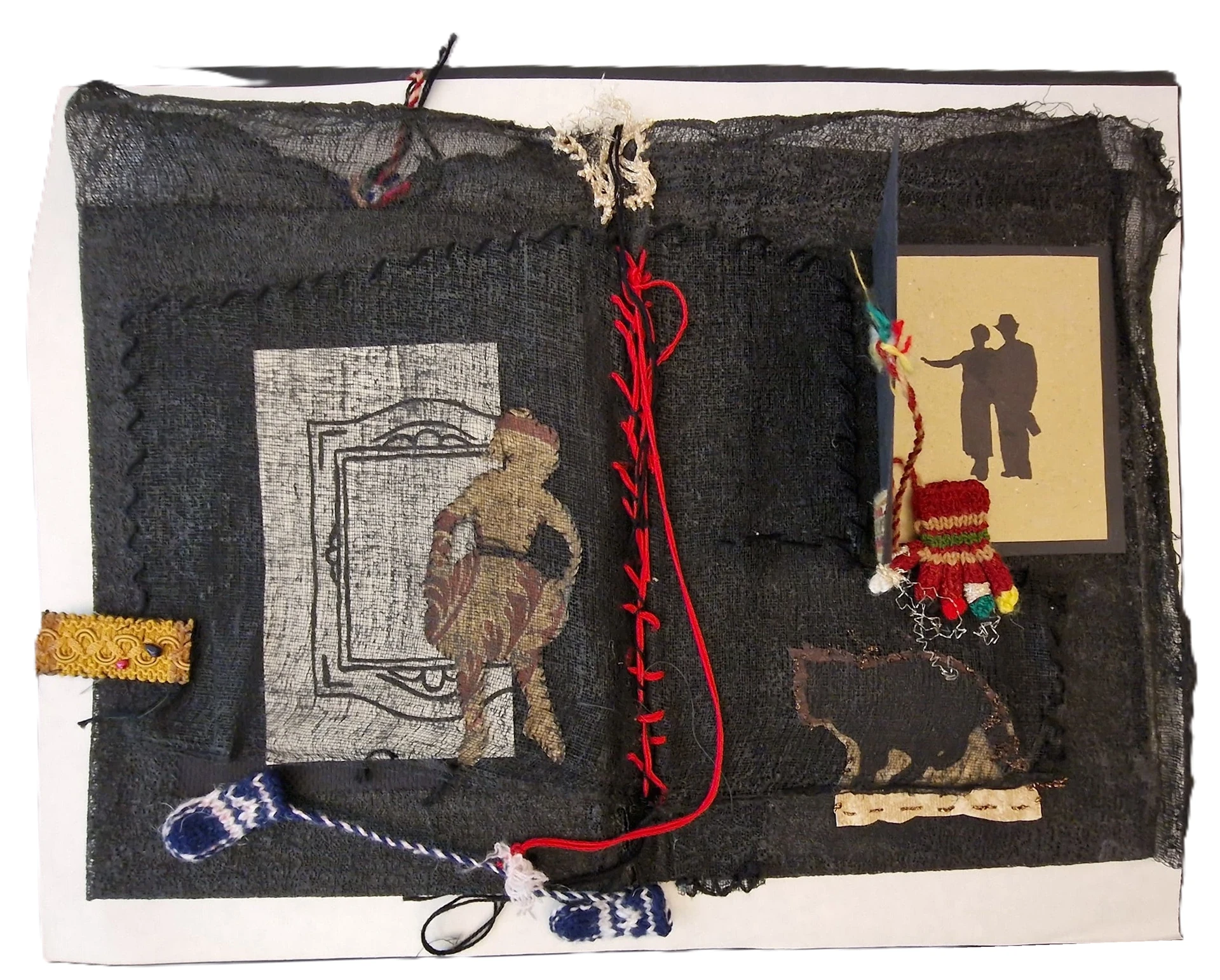
The exhibition traces the artist’s poetic and creative path through the use of tarlatan—a lightweight, pure-cotton fabric with an open weave, often stiffened with sizing—which has been a hallmark of her work since her beginnings in the 1970s. Over time, Lea Contestabile has transformed this material into an expressive, poetic medium, making it a central element of her artistic language and tracing its evolution up to her most recent works.
“Lea Contestabile invites us to reflect on the profound meaning of memory—not as a static archive of the past, but as a living web of relationships, affections, images, and stories. The museum serves as the ideal space where these threads of memory come to life, fostering a dialogue between the past and the present. They are invisible strands that we are called upon to stretch across our own reality—‘webs of intricate relationships seeking a form,’ to borrow a phrase from Calvino. In this exhibition, that form manifests as the fragile yet resilient *tarlatan* (a type of sheer, starched fabric), which Contestabile uses to ensnare memory,”
states Federica Zalabra, Director of the National Museum of Abruzzo and curator of the exhibition.
Fabio De Chirico, Director of the Central Institute for Graphics and co-curator of the exhibition, remarks:
“This exhibition dedicated to Lea Contestabile offers a significant opportunity to trace an artistic journey that, beginning in the 1970s, transformed *tarlatan*—a material traditionally associated with the art of printmaking—into a unique and highly recognizable expressive language. The artist’s relationship with the *Calcografia Nazionale* (National Print Collection)—now part of the Central Institute for Graphics—marks a pivotal chapter in this story: it was within the workshops and through the practice of engraving that she began an exploration destined to evolve far beyond the confines of traditional printmaking. Furthermore, the exhibition highlights Lea Contestabile’s extraordinary ability to transform physical material into a tool for storytelling and memory, weaving together personal experiences, family life, and the collective imagination. In this way, *tarlatan* becomes a fabric through which the past resurfaces, undergoes transformation, and continues to engage in a dialogue with the present.”
“For Lea, tarlatan acts as a veil—a filter that blurs the recognizability of significant forms, eluding any sense of sharp clarity or precise definition; it is, in a way, a patina of time. Lea reveals her private world of dreams and memories—lost in childhood and adolescence—and her journey as a woman toward existential and expressive freedom, evoking them within an atmosphere that feels like a fairy tale. And, much like in fairy tales, this atmosphere harbors an eternal dualism: the interplay between boundless happiness and unbearable pain, joy and anguish, good and evil,”
notes curator Barbara Drudi.
“Life is composed of separations—sometimes difficult, often painful or even unacceptable, yet necessary—so that the mysterious ‘new’ that each of us carries within can emerge, grow, and find expression. For over fifty years, Lea Contestabile has transformed this deeply human truth into works of art. Using thread and glue, found objects, and photographs, she stitches together the affections of the past and the present, retracing her history and exploring the relationships that shape identity,”
asserts curator Francesca Franco.
The Exhibition Layout
The exhibition is organized into three sections, distributed across two rooms and the loggia of the Castello cinquecentesco.
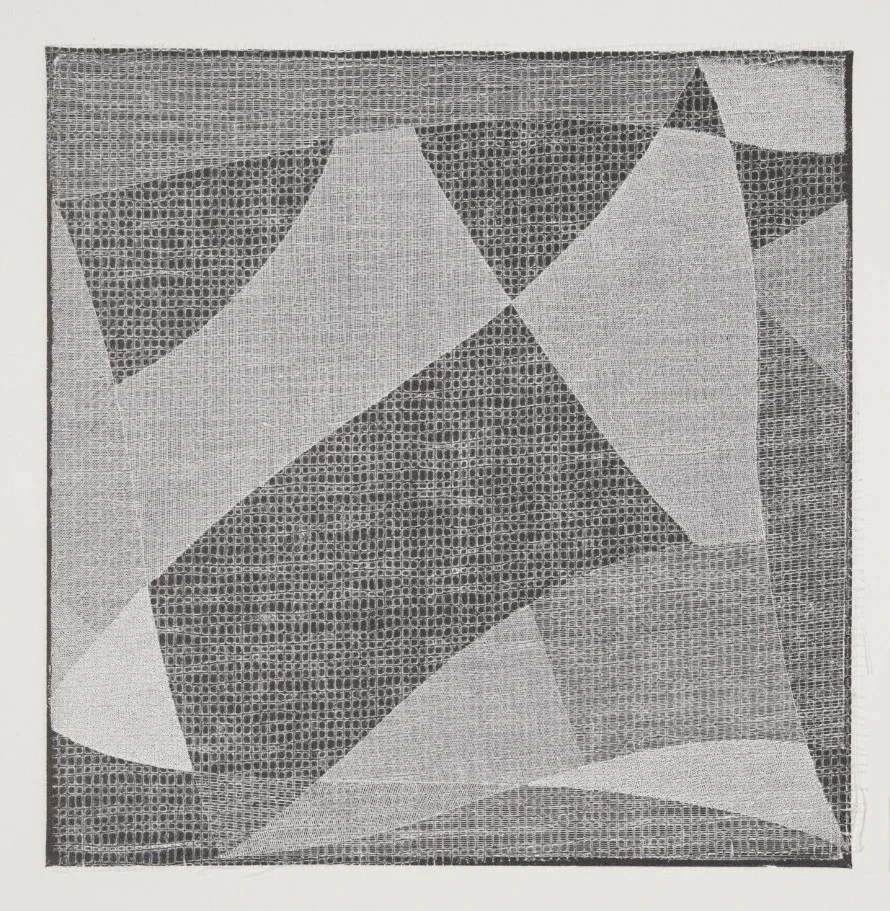
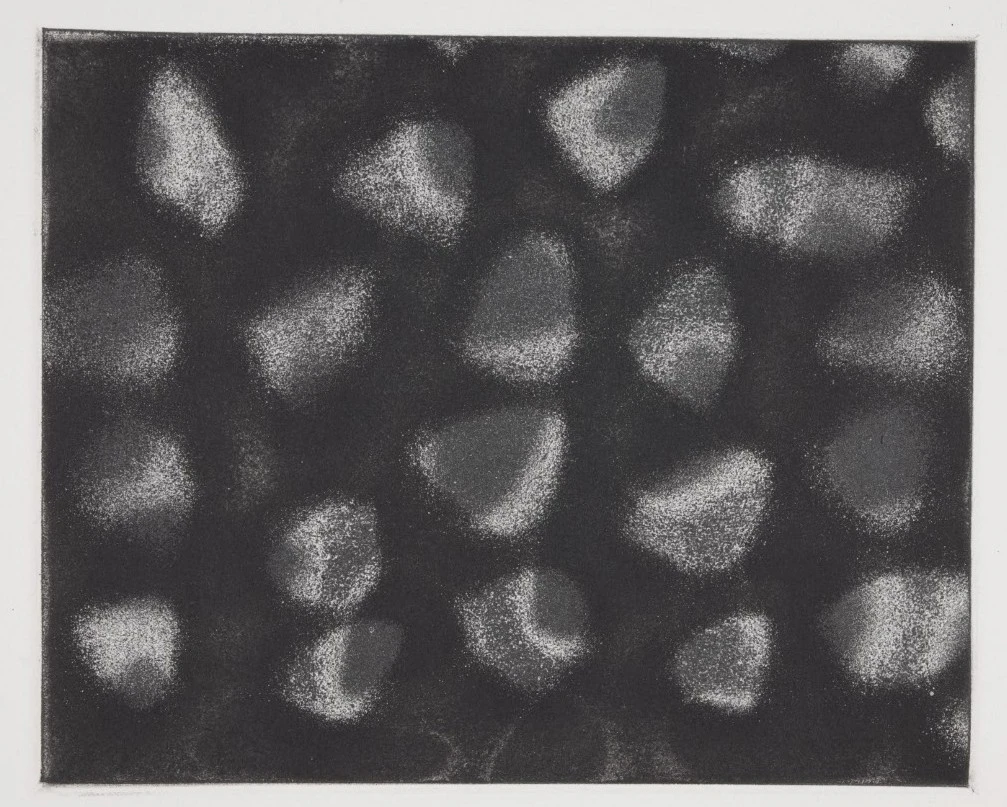
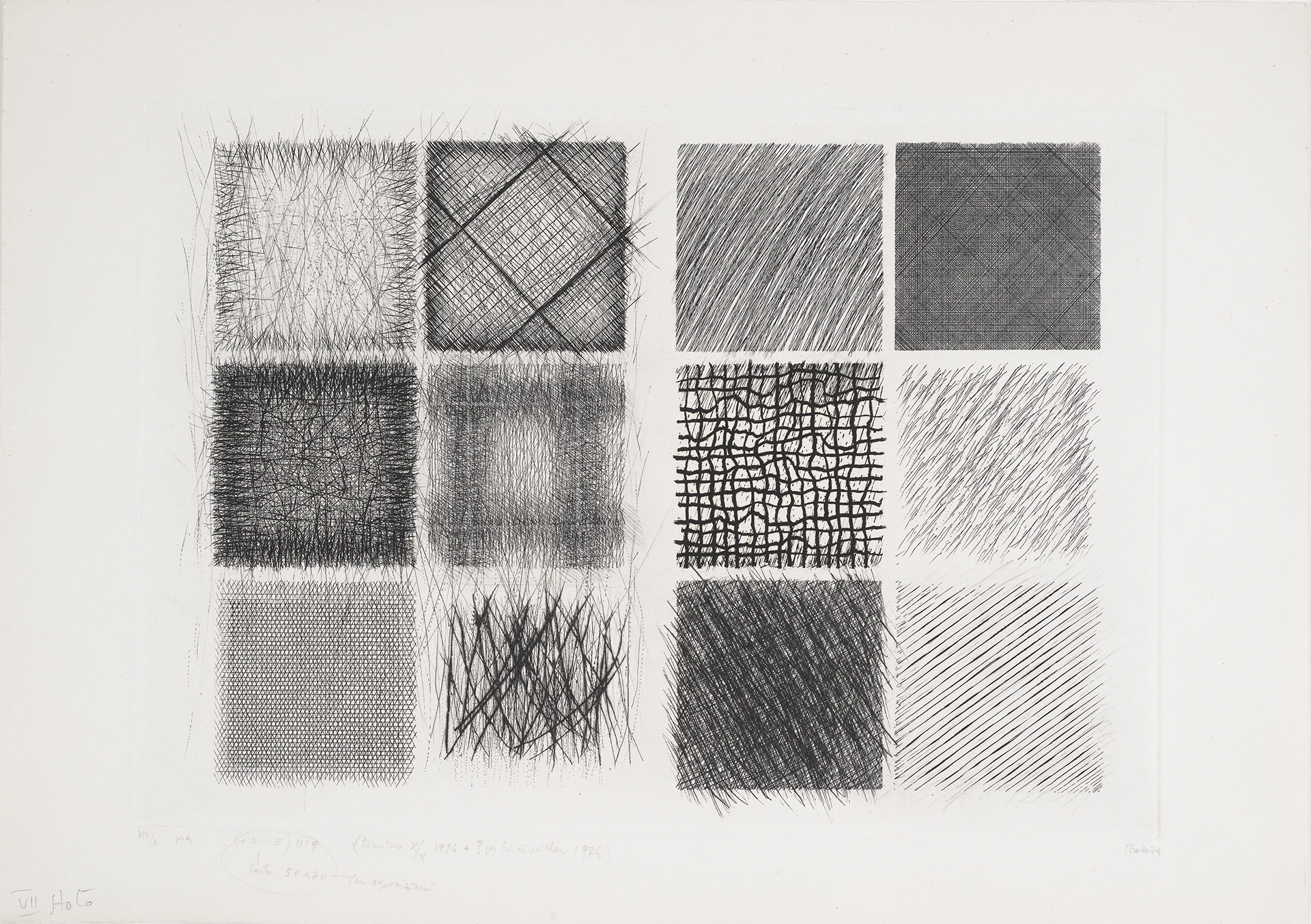
The first section, housed in Room 5, is dedicated to the artist’s work from the 1970s and her time at the Calcografia Nazionale in Rome. She arrived there thanks to a scholarship from the Accademia di San Luca—facilitated by her professors at the Academy of Fine Arts in L’Aquila, Lorenza Trucchi and Guido Strazza—to attend courses offered by the institution, which was directed by Carlo Bertelli from 1973 to 1977.
Bertelli introduced an interdisciplinary vision to the Calcografia Nazionale, fostering a dialogue between fine-art printmaking and photography—both of which he viewed as “multipliers of culture.” He also sought to promote an understanding of the graphic arts among emerging artists; to this end, he tasked Guido Strazza with redefining the analysis of the “mark” (or sign) and invited the artist Giulia Napoleone—a figure associated with the neo-avant-garde movements and a professor at the Academy of Fine Arts in L’Aquila during the 1972–73 academic years—to conduct field-based research.
The works on loan from the Istituto Centrale per la Grafica—including pieces by Lea Contestabile from her Album didattici (1974 and 1975), Gesto e segno (1974) by Guido Strazza, and Cielo VII (1973) by Giulia Napoleone—capture a significant moment in the artist’s formative journey. They help reconstruct the context of experiences, artistic languages, and graphic experimentations from which her own research emerged. It is precisely within the practice of printmaking that her interest in tarlatan—a material intrinsically linked to this technique—took root. Over the course of fifty years, this material became one of the hallmarks of her work, evolving from a mere tool used in the printmaking process into a unique medium of artistic expression. Upon returning to L’Aquila in 1976, the artist internalized her Roman experience, transforming tarlatan into her own “poetic material,” which she used to create both two-dimensional and three-dimensional works, ranging from small to large scale.
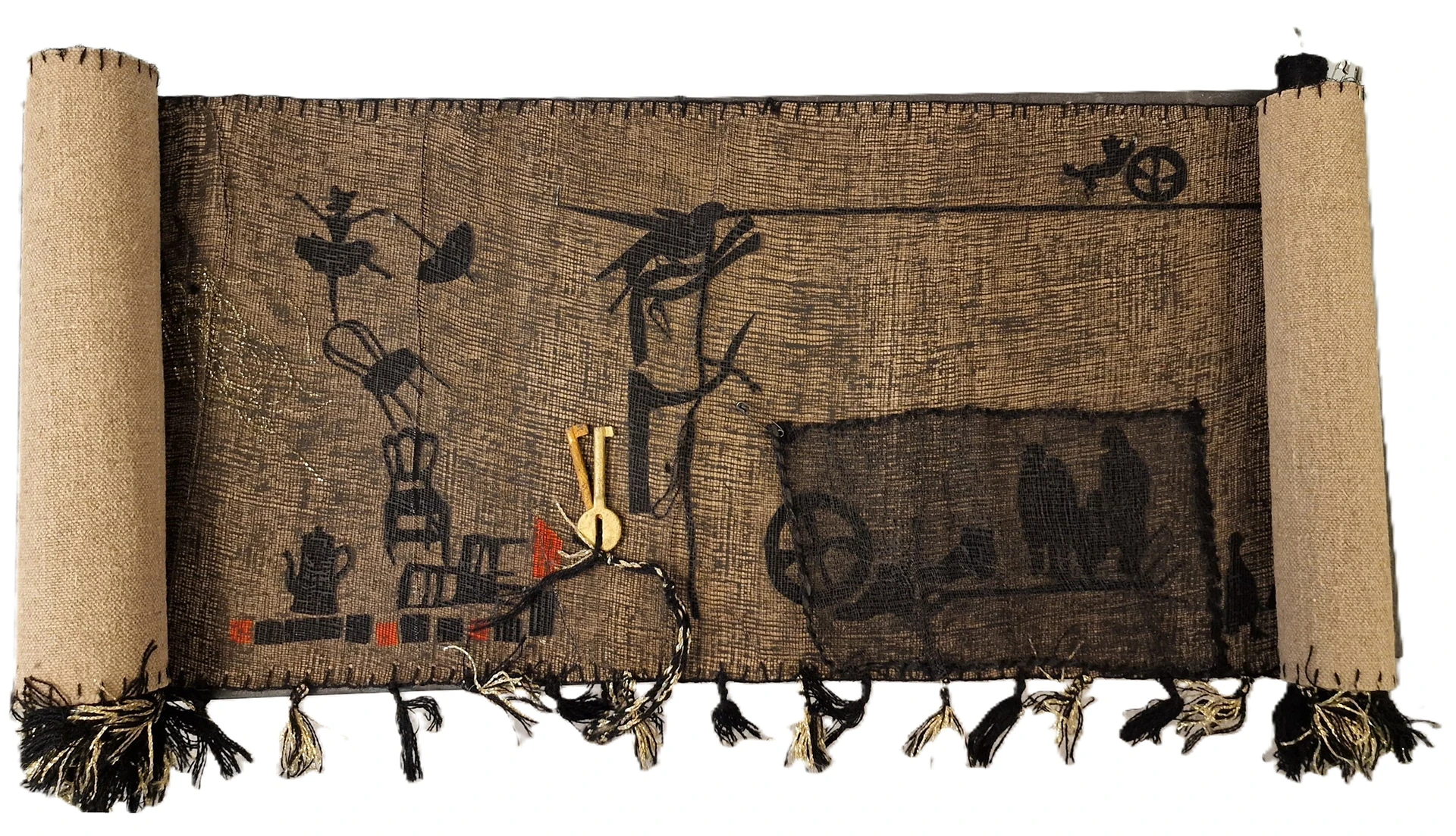
The second section of the exhibition, housed in the castle’s loggia, is dedicated to more recent works created between 2016 and 2024, all drawn from the artist’s own studio. Among these are her “artist’s books”—unique pieces conceived as vessels for memory—in which photographs, tarlatan, wool threads, trimmings, paper, and small objects are interwoven. These compositions transcend the traditional form of a book, opening up into a distinct visual and tactile dimension.
Through a narrative style akin to a diary, the artist pieces together fragments of her own life—family memories and childhood images—to create an intimate universe that opens up to a broader reflection on memory and human affection.
The third section features three works the artist describes as “tapestries,” created specifically for this exhibition and installed within the niches of Room 6. Engaging in an open dialogue with the medieval panels and sculptures of the Madonna and Child—part of the permanent collection of the National Museum of Abruzzo and particularly meaningful to Lea Contestabile—the series Le mie maDonne (2026) draws upon the figure of the Virgin Mary, both in its thematic content and in its signature color palette of gold, red, and blue. Here, the figure serves as a symbol of the feminine transition from adolescence to marriage and motherhood. These forms are developed from photographs taken from the archive of the artist’s father, Guido Orante Contestabile, which have been reworked through filters, layering, and poetic visual interventions. The result is an evocative glimpse into a rural world that has since vanished, yet remains alive within both individual and collective memory.
In dialogue with the museum’s permanent collection, Lea Contestabile’s works offer a contemporary reinterpretation of themes and archetypes from Western visual culture. They explore the dimensions of memory and identity, ritual, the relationship between the individual and the community, and the connection to one’s own roots—understood as a cultural, emotional, and symbolic heritage.
Exhibition Profile
Title: Tarlatan as a Trap for Memory: Lea Contestabile, Past and Present
Artist: Lea Contestabile (Ortucchio, L’Aquila, 1949)
Curators: Fabio De Chirico, Barbara Drudi, Francesca Franco, Federica Zalabra
Venue: National Museum of Abruzzo – Castello cinquecentesco, L’Aquila
Opening to the public: November 11, 2026, from 12:00 PM
Closing date: December 11, 2026
Promoting and collaborating institutions: National Museum of Abruzzo, Central Institute for Graphics (Rome), MuBAq – Children’s Museum of L’Aquila
Program: L’Aquila, Italian Capital of Culture 2026
Supported by: Municipality of L’Aquila
Exhibition layout: Three sections distributed across Room 5, the loggia, and Room 6 of the 16th-Century Castle.
Works on display: Graphic works from the 1970s, linked to Lea Contestabile’s formative period at the Calcografia Nazionale in Rome—including pieces by the artist herself, as well as by Guido Strazza and Giulia Napoleone; works created between 2016 and 2024, including “artist’s books” and “book-objects” from the artist’s studio; and three previously unseen tapestries from the series Le mie maDonne (2026), created specifically for this exhibition.
Visiting Hours
From November 11 to December 11, 2026, in accordance with the opening hours of the National Museum of Abruzzo (Museo nazionale d’Abruzzo).
Opening Hours:
- Tuesday to Sunday: 9:00 AM – 7:00 PM
- Ticket office closes: 6:00 PM
December 4: Special evening opening from 7:00 PM to 10:30 PM (last entry at 10:00 PM)