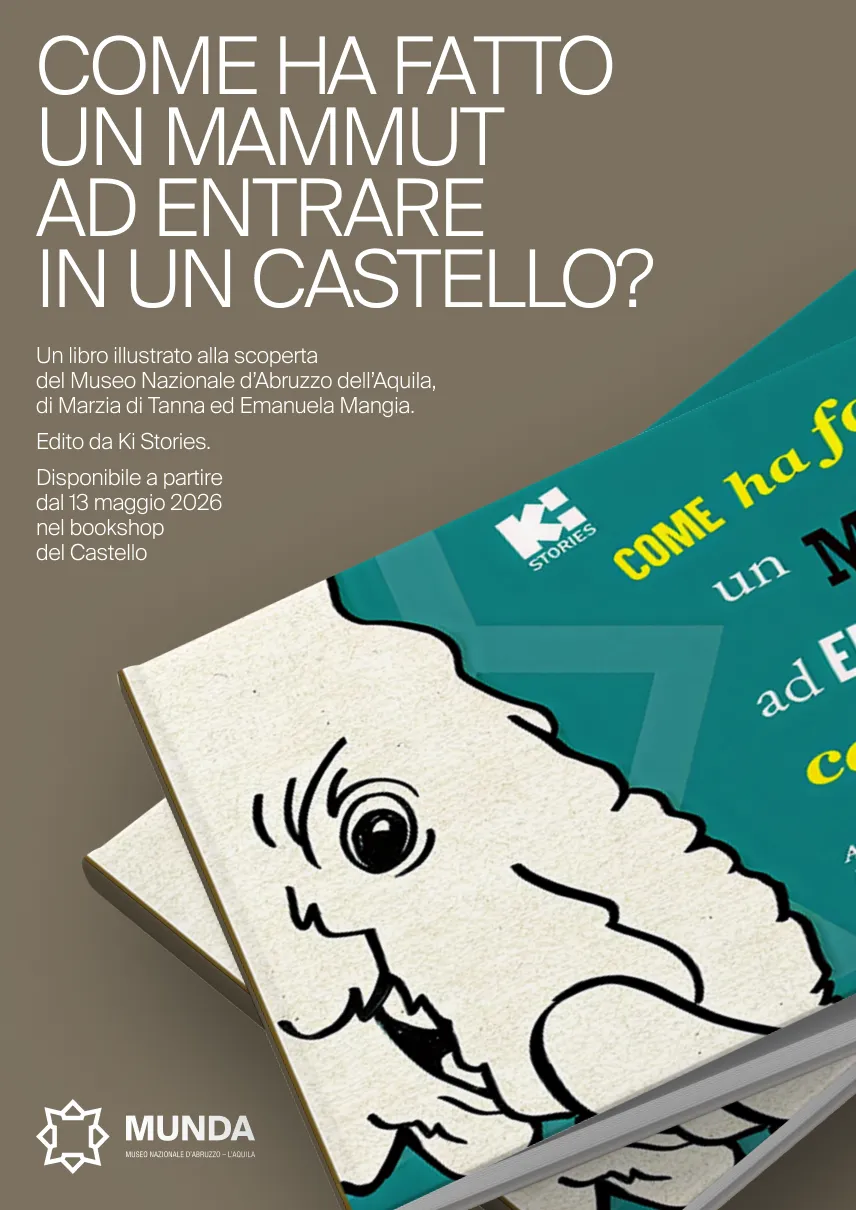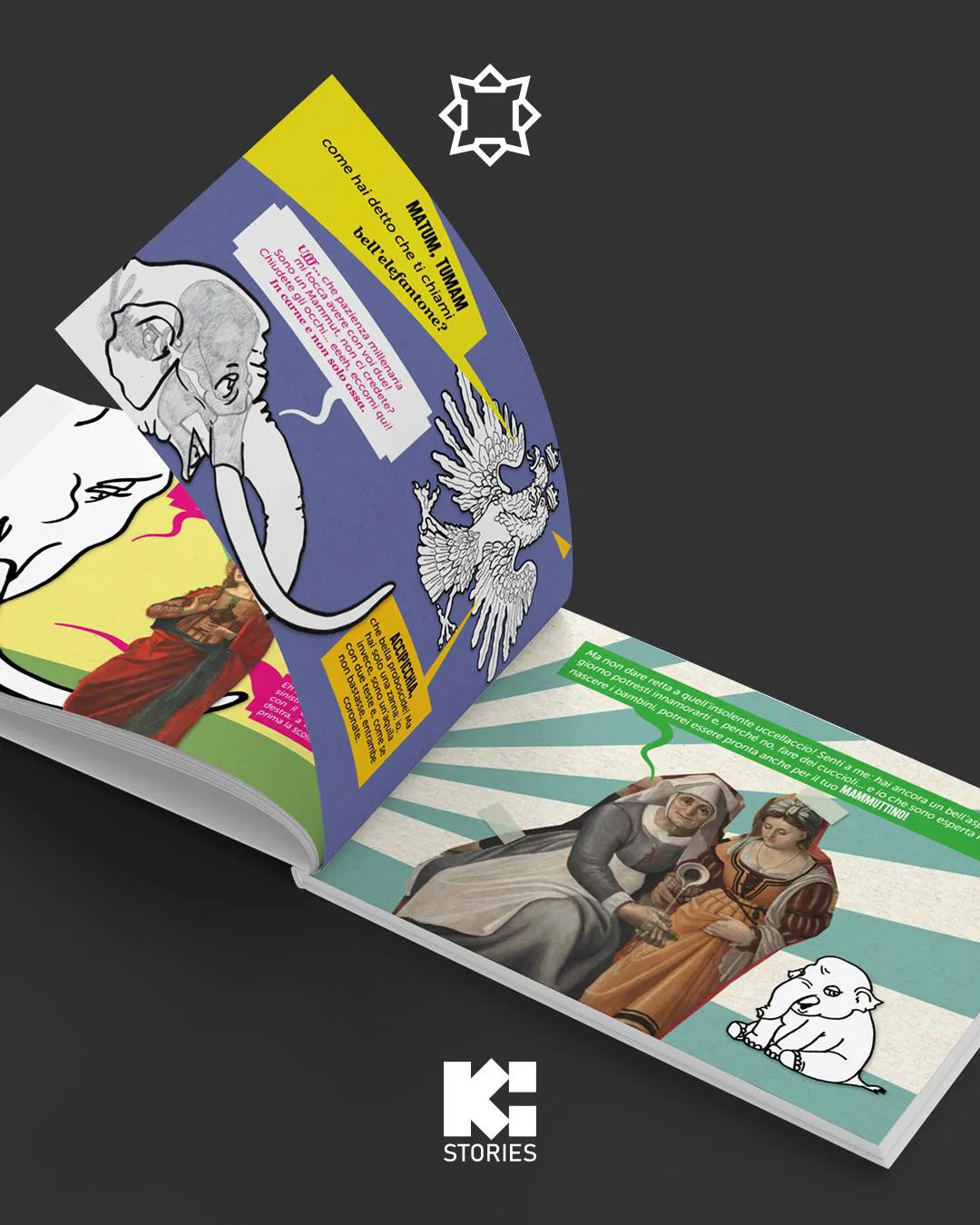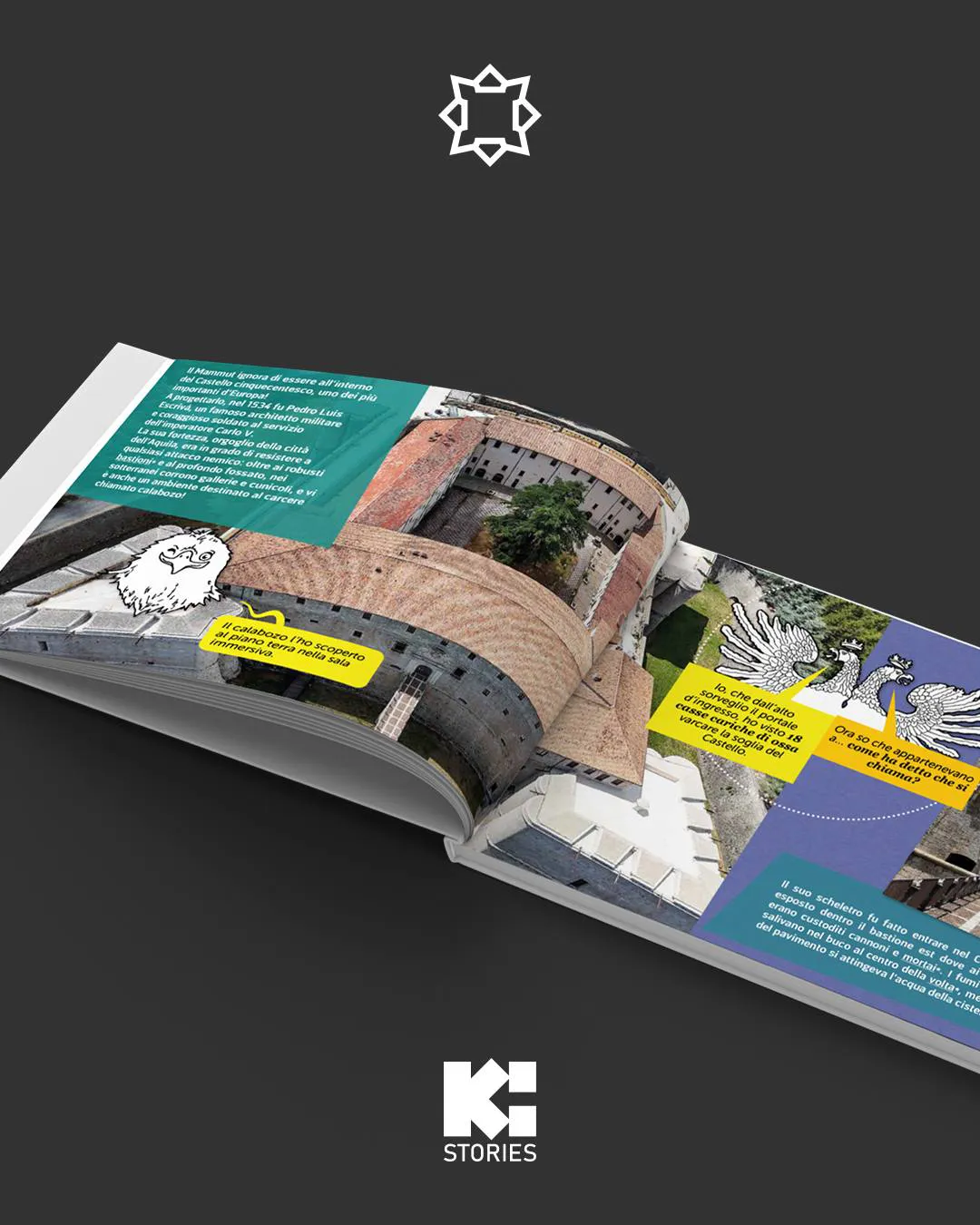

The Museo Nazionale d’Abruzzo in L’Aquila has published its first illustrated book for children, How Did a Mammoth Get Into a Castle?, a publishing project designed to introduce young children to cultural heritage through storytelling, play and imagination.
Conceived as a journey through time, the book establishes a dialogue between past and present in which the Museum acts as a genuine catalyst for the revival of collective memory. Through the encounter between the eagle – the city’s symbolic emblem – and the mammoth, an emblem of its deepest and most ancient roots, a narrative takes shape in which the works housed in the halls of the MuNDA become active tools of knowledge, capable of bringing to life shared stories, relationships and meanings.
The journey of the two protagonists, who discover and recognise one another through their dialogue with the artworks, reflects the Museum’s role as a living, dynamic space, where memory is not merely preserved but continually reactivated and reinterpreted. In this sense, MuNDA establishes itself as a museum of the local area, a place where identity, history and community intertwine, leading the two animals to symbolically share the representation of the city of L’Aquila.
How did a mammoth get into a castle? also serves as a valuable resource for developing travelling workshops within the museum, designed to enhance the educational programme for primary schools.
The book, conceived by MuNDA Director Federica Zalabra, written and illustrated by art historians Emanuela Mangia and Marzia Di Tanna, and published by the independent publishing house Ki Stories, was presented on 13 May at the eastern bastion of L’Aquila’s Castello cinquecentesco, which has once again served as the Museum’s home since 20 December 2025.
“We are confident that this book, produced in a contemporary style and language and in line with current research in the field of education, will be a valuable tool for our youngest visitors to learn about the museum,” emphasises the Director.
The illustrated book is on sale at the Museum’s bookshop.