
The study of sediments and ancient pollen to reconstruct the environment
The skeleton found was resting on fine dark grey sand, with various minerals and fragments of limestone (the white-coloured sedimentary rocks that form the surrounding mountains). On top of this was a layer of grey clay, and above this a layer sand and clay. In the last layer, was fossil-rich and darker clay.
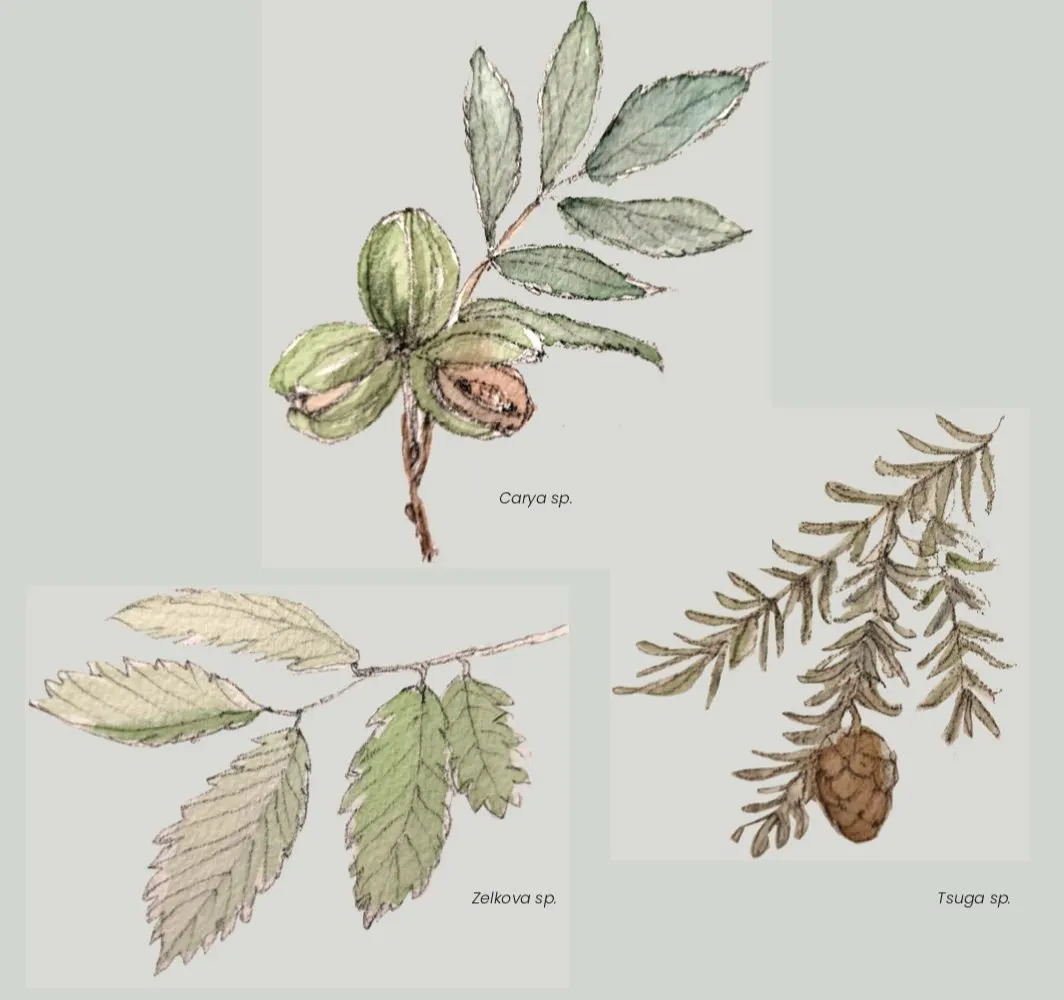
1.3 million years ago, in this area there were forests with trees that are no longer part of Italian flora: Tsuga (a conifer) and Carya (a tree of the walnut family), which are now found in Asia and North America; and Zelkova, a tree of the elm family that grows in Asia, and that was recently rediscovered in Sicily.
This data is derived from the study of ancient pollen: the fact that there were many Tsuga and Carya, and few pines and cedars, indicates that it was a warm interglacial period.
Illustrations